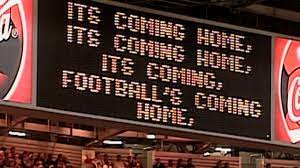
The phrase originates from the song “Three Lions,” which was released in 1996 for the UEFA European Championship (commonly referred to as Euro ’96) that was hosted by England. The song was performed by comedians David Baddiel and Frank Skinner along with the band The Lightning Seeds.
The lyrics capture the perpetual hope and frequent disappointment experienced by England fans. “It’s coming home” specifically refers to the idea that football, which has its modern origins in England, would be “returning” to its birthplace by way of an English tournament victory. Given that England had not won a major international tournament since the 1966 World Cup, the song encapsulates the optimism and yearning of the English fan base. Over the years, the phrase has evolved into a rallying cry for English fans during major tournaments, expressing their hope and belief that England might once again capture international glory.
The United Kingdom, with its rich footballing history, has played host to a number of major football tournaments over the years. Whether it’s the inception of football or the modern professional era, the UK’s stadiums, teams, and passionate fans have provided the perfect backdrop for unforgettable footballing moments. In this blog, we’ll explore the major football tournaments that have taken place in the UK.
The 1966 FIFA World Cup


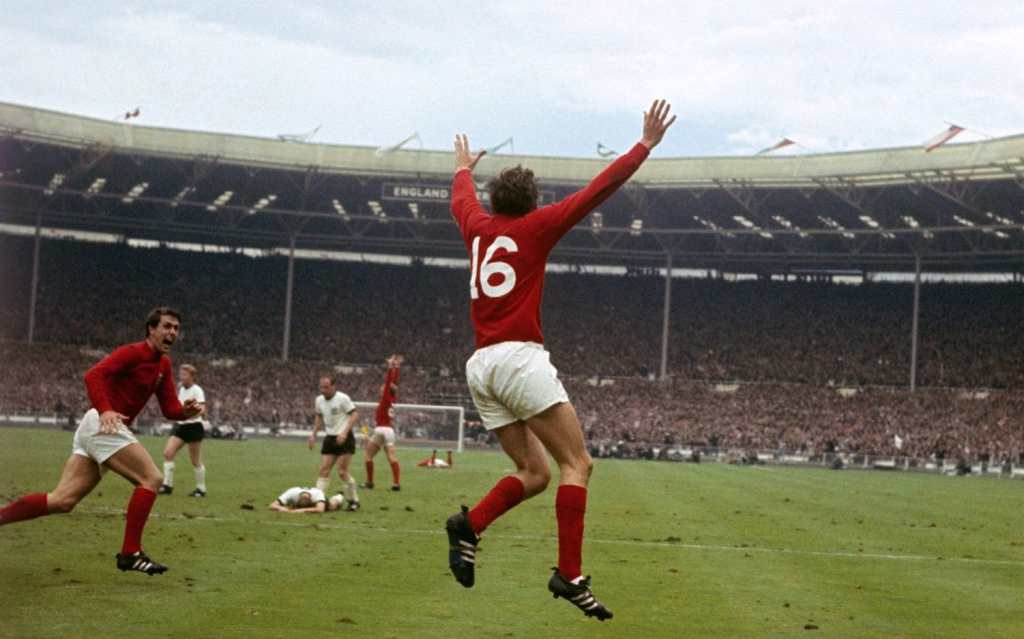
Undoubtedly, the most iconic football tournament ever hosted in the UK is the 1966 FIFA World Cup. Held in England from 11 to 30 July, the tournament witnessed 16 nations from 4 different confederations competing for the coveted title.
Highlights: The tournament is best remembered for England’s maiden World Cup triumph, as they defeated West Germany 4-2 after extra time in a thrilling final at Wembley Stadium. Geoff Hurst’s hat-trick in the final, the first and only in a World Cup final to date, is etched in football folklore, especially his controversial second goal which sparked debate over whether the ball had fully crossed the line. The event also introduced “World Cup Willie,” the lion mascot, marking the beginning of the tradition of World Cup mascots.
Venues: Major stadiums such as Wembley (London), Old Trafford (Manchester), Goodison Park (Liverpool), Hillsborough (Sheffield), Ayresome Park (Middlesborough) Roker Park (Sunderland) and White City (London) played host.
The 1996 UEFA European Championship (Euro ’96)
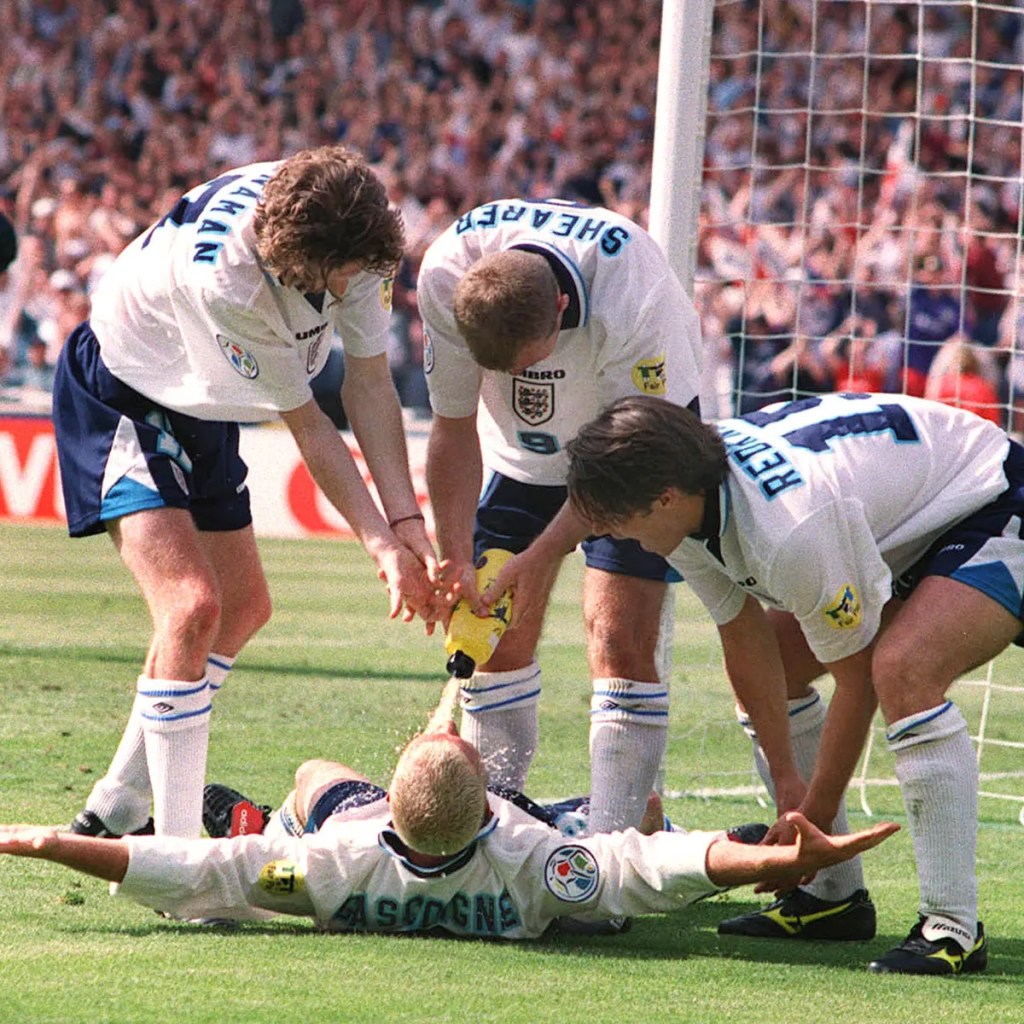
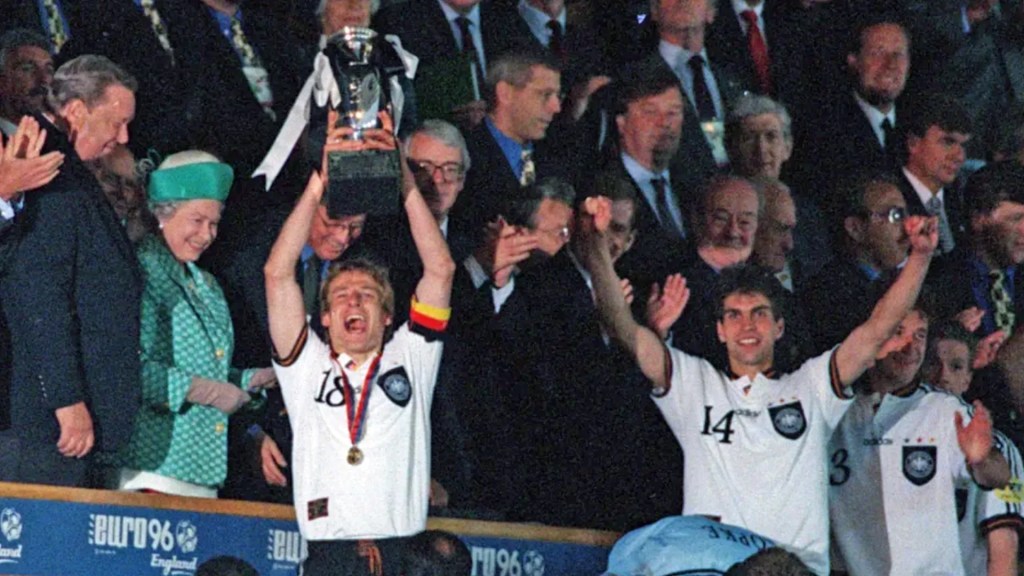
Nearly three decades after the World Cup, England once again played host, this time to the European Championship. Taking place from 8 to 30 June 1996, 16 European nations battled for supremacy.
Highlights: In essence, Euro ’96 was not just a football event. It blended sport, culture, music, and national identity, leaving an indelible mark on all who witnessed it. On the pitch, Paul Gascoigne’s brilliant goal and subsequent “dentist’s chair” celebration against Scotland stood out. The semi-final between England and Germany is particularly remembered for its penalty shootout, where Gareth Southgate missed the crucial spot-kick. The Czech Republic surprised many by reaching the final, but it was Germany who triumphed, clinching the title with a “golden goal” against the Czechs in the final.
Venues: Eight venues including Wembley (London), Old Trafford (Manchester), Anfield (Liverpool) Villa Park (Birmingham), Elland Road (Leeds), Hillsborough (Sheffield) and St James Park (Newcastle) were used.
The Women’s UEFA European Championship 2022
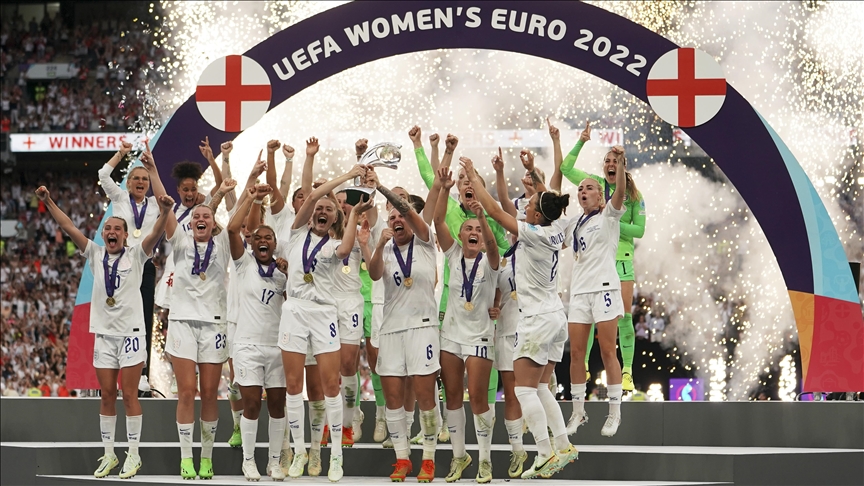
While men’s tournaments have historically gained more attention, the UK has also been at the forefront of promoting women’s football. England hosted the Women’s Euro in 2022, further cementing its commitment to the women’s game.
Highlights: The Women’s UEFA European Championship of 2022, hosted by England, was a testament to the soaring popularity and competitive nature of women’s football. Throughout the tournament, stadiums across the country were filled with passionate fans, showcasing the sport’s growing reach. While many teams displayed exceptional skill and teamwork, it was the host Lionesses that clinched the title. Memorable moments abounded, but standout performances from emerging talents and seasoned veterans alike caught the world’s attention. Off the pitch, the event exemplified the positive cultural shift towards greater recognition and appreciation of women’s sports, setting a new benchmark for future tournaments.
Venues: Stadiums across England, including Wembley (London), Old Trafford (Manchester), Bramhall Lane (Sheffield), St Mary’s (Southampton), Stadium MK (Milton Keynes), Brentford Community Stadium (London), Amex Stadium (Brighton), New York Stadium (Rotherham), Leigh Sports Village (Manchester) and Academy Stadium (Manchester) hosted the matches.
The European Cup / UEFA Champions League Final

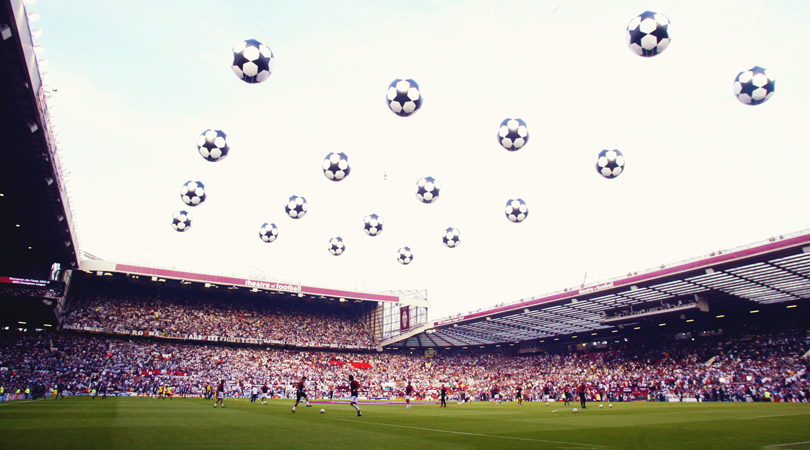

The UK has also hosted the UEFA Champions League final, Europe’s premier club competition, on multiple occasions:
1960 (Hampden Park, Glasgow): Real Madrid vs. Eintracht Frankfurt. Madrid won 7-3.
1963 (Wembley, London): AC Milan vs. Benfica. Milan won 2-1.
1968 (Wembley, London): Manchester United vs. Benfica. United won 4-1.
1971 (Wembley, London): Ajax of Amsterdam vs. Panathinaikos. Ajax won 2-0.
1976 (Hampden Park, Glasgow): Bayern Munich vs. St Etienne. Bayern won 1-0.
1978 (Wembley, London) Liverpool vs. Brugge. Liverpool won 1-0.
1992 (Wembley, London) Barcelona vs. Sampdoria. Barca won 1-0.
2002 (Hampden Park, Glasgow) Real Madrid vs. Bayer Leverkusen. Real won 2-1.
2003 (Old Trafford, Manchester): AC Milan vs. Juventus. Milan won on penalties.
2011 (Wembley, London): Barcelona vs. Manchester United. Barcelona won 3-1.
2013 (Wembley, London): Bayern Munich vs. Borussia Dortmund. Bayern won 2-1.
2017 (Millennium Stadium, Cardiff) Real Madrid vs. Juventus. Real won 4-1.
Summary
The UK’s footballing heritage is second to none, and the tournaments it has hosted are a testament to its undying passion for the game. From the magical World Cup win in 1966 to modern-day classics in the Champions League, the UK remains a pivotal hub in the world of football. As we look to the future, there’s every reason to believe that the nation will continue to be at the forefront of the sport, hosting more memorable tournaments and writing new chapters in its storied footballing history.


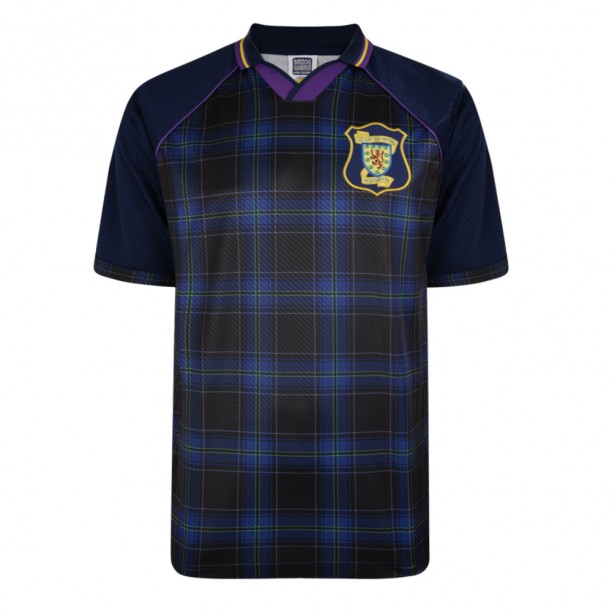
SHOP a huge collection of official international retro shirts at 3Retro.com

 thehexblog.com