
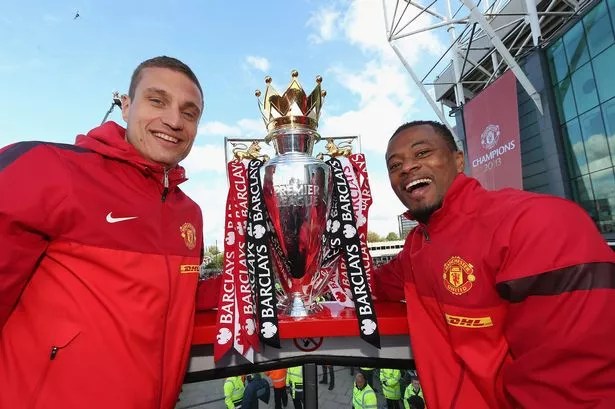
The January transfer window is often viewed as a time for clubs to make last-minute adjustments to their squads in order to bolster their chances for the rest of the season. While some winter signings are short-term fixes or emergency buys, history has shown that the January window can also produce iconic, game-changing players who leave an indelible mark on their clubs and football history. In this blog, we’ll dive into some of the best January football transfers ever, highlighting those deals that went on to change the trajectory of a club or even the footballing landscape itself.
1) Luis Suárez (Ajax to Liverpool, 2011)
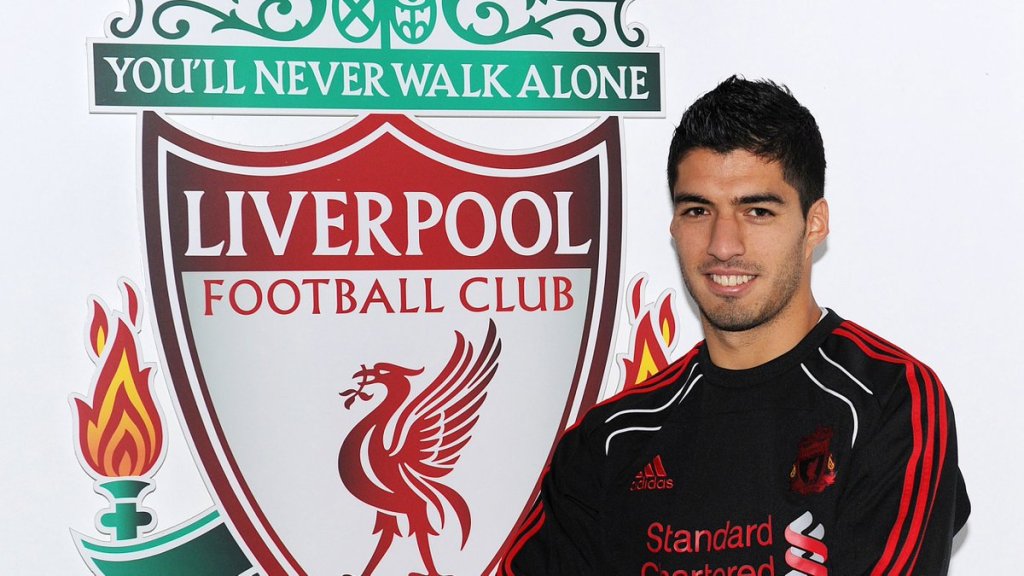
In January 2011, Luis Suárez joined Liverpool from Ajax for a reported fee of £22.8 million, which at the time was a club-record transfer fee. Suárez had been in exceptional form for Ajax, having scored goals for fun in the Eredivisie and making a name for himself in European competitions. His impressive performances for Uruguay in the 2010 FIFA World Cup, where he played a pivotal role in their run to the semifinals, further raised his profile.
At the time of his transfer, Liverpool were in a period of transition following the recent departure of manager Roy Hodgson, and their attacking play had been inconsistent. The club was in need of a talisman, and Suárez arrived with high expectations especially with the No 7 on his back. While his signing was not without controversy due to his history of incidents on and off the pitch, there was no denying his immense talent.
Suárez wasted no time making his mark at Liverpool. He made an immediate impact with his sharp technical ability, creativity, and ruthlessness in front of goal. Though he was initially banned for the first few matches after his arrival due to a suspension carried over from his time at Ajax, once he returned to action, Suárez became an integral part of Liverpool’s attack and scored 4 goals in 11 games.
His first full season (2011-2012) saw him score 17 goals and provide numerous assists, but it was in the subsequent seasons that his true brilliance was fully unleashed. Suárez’s partnership with Daniel Sturridge, known as the “SAS” duo, was deadly, and the two formed one of the most potent attacking combinations in the Premier League.
Suárez’s defining season at Liverpool came in the 2013-2014 campaign, where he established himself as one of the best strikers in the world. He scored 31 goals in 37 Premier League appearances, winning the Premier League Golden Boot and earning multiple individual accolades. His incredible goal-scoring run helped Liverpool challenge for the Premier League title, as they finished second, just behind Manchester City in a thrilling race.
Some of his goals that season were truly spectacular, showcasing his clinical finishing, dribbling ability, and overall football intelligence. His standout moment was a hat-trick against Norwich City and his memorable four goals in a 5-1 victory over Newcastle United, which cemented his status as one of the league’s finest forwards.
In addition to his goals, Suárez was also known for his work rate and creativity. His dribbling, vision, and ability to link up play were just as important as his ability to finish, and he often dropped deep to get involved in the buildup play. Suárez’s performances that season were pivotal to Liverpool’s attack, and he played a major role in the team’s entertaining and attacking football under manager Brendan Rodgers.
133 appearances for Liverpool (2011-2014)
82 goals and 46 assists
1 Premier League Golden Boot (2014)
PFA Team of the Year (2014)
While Suárez’s time at Liverpool was full of dazzling performances, it was also marred by a series of controversial incidents. His infamous bite on Branislav Ivanović during a match against Chelsea in 2013 resulted in a lengthy ban, and his racial abuse controversy involving Patrice Evra in 2011 further added to the debate surrounding his character. Despite these incidents, Suárez’s undeniable talent meant that his performances on the pitch were often the focal point.
Suárez’s time at Liverpool, however, is defined by his incredible goalscoring ability and his commitment to the club, rather than his controversies. He was the driving force behind many of Liverpool’s best moments in the early 2010s, and his role in the 2013-2014 season remains one of the club’s most memorable.
After the 2014 season, Suárez moved to Barcelona for a fee of £65 million, where he would go on to win numerous trophies, including multiple La Liga titles, Champions League trophies, and more. However, his time at Liverpool, particularly the 2013-2014 season, solidified his legacy as one of the best players in the Premier League.
2) Nemanja Vidić (Spartak Moscow to Manchester United, 2006)
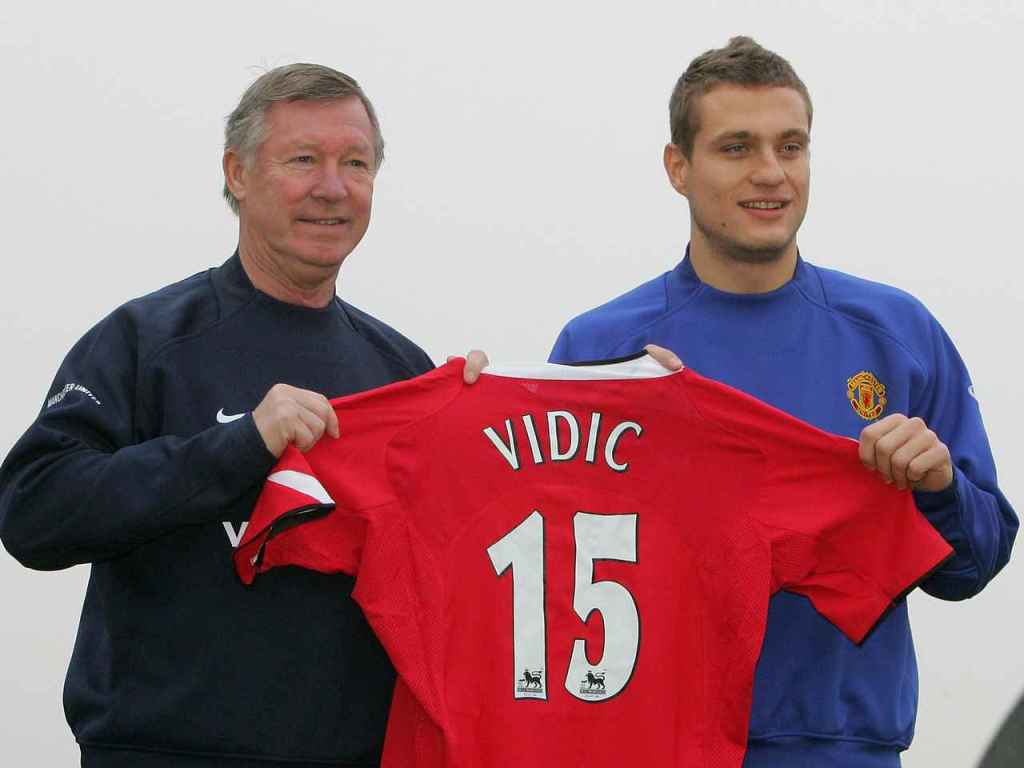
In January 2006, Nemanja Vidić was signed by Sir Alex Ferguson for a fee of around £7 million, which was considered a solid but somewhat modest fee for a central defender at the time. Vidić had impressed in the Russian Premier League with Spartak Moscow, earning a reputation for his tough-tackling, aggressive style, and aerial ability. Manchester United, who were looking to strengthen their defense, brought him in alongside Patrice Evra, who was also joining in that January window. While Evra’s arrival immediately raised expectations, Vidić’s signing was met with a bit more skepticism, as he was largely unknown to the wider English football audience.
However, Vidić’s transition to the Premier League was swift and seamless. Despite the physical nature of the Premier League, he adapted quickly, and within a year, he had established himself as one of the league’s most formidable central defenders.
Vidić’s partnership with Rio Ferdinand at the heart of Manchester United’s defense became one of the most iconic duos in Premier League history. The Serbian was a no-nonsense, tough-tackling center-back who complemented Ferdinand’s more elegant and composed style. Together, they formed an almost impenetrable wall at the back for United, and their understanding was crucial to the club’s domestic and European success during the late 2000s and early 2010s.
Vidić was renowned for his physicality, leadership, and aerial dominance. He won countless headers, made crucial tackles, and was an absolute rock in United’s defense. While he was never the most technically gifted ball player, his reading of the game, positional awareness, and fearlessness in duels made him a player that attackers feared. His commanding presence and leadership qualities also made him one of the best captains in the club’s history after he took over the armband from Gary Neville in 2010.
One of Vidić’s defining seasons came in 2007-2008, when he was part of a Manchester United defense that was pivotal in winning the Premier League and the UEFA Champions League. Vidić was a key figure in the team’s European triumph, and his defensive performances were critical in United’s win over Chelsea in the Champions League final in Moscow.
He was also an integral part of the squad that won four Premier League titles and helped Manchester United dominate English football in the late 2000s.
300 appearances for Manchester United (2006-2014)
20 goals scored
5 Premier League titles (2007, 2008, 2009, 2012, 2013)
3 League Cups (2006, 2009, 2010)
1 UEFA Champions League (2008)
1 FIFA World Club Cup (2008)
4 PFA Team of the Year selections (2007, 2008, 2009, 2011)
2 Premier League Player of the Season (2009, 2011)
In addition to his exceptional defensive ability, Vidić was a natural leader. He captained Manchester United for several years and was a vocal presence on the pitch, organizing the defense and motivating his teammates. His leadership was instrumental in United’s success during his time at the club, particularly during the final years of Sir Alex Ferguson’s reign.
Vidić’s commitment to the cause and his physical, no-fear style of defending made him an enduring fan favorite at Old Trafford. He was the kind of player who would put his body on the line for the team and would fight for every ball, no matter how difficult the challenge.
After leaving Manchester United in 2014, Vidić had a brief spell at Inter Milan before retiring from professional football in 2016. While his time at United was his most successful, he was also highly regarded in Italy, though injuries started to impact his ability to play at the highest level.
3) Virgil van Dijk (Southampton to Liverpool, 2018)
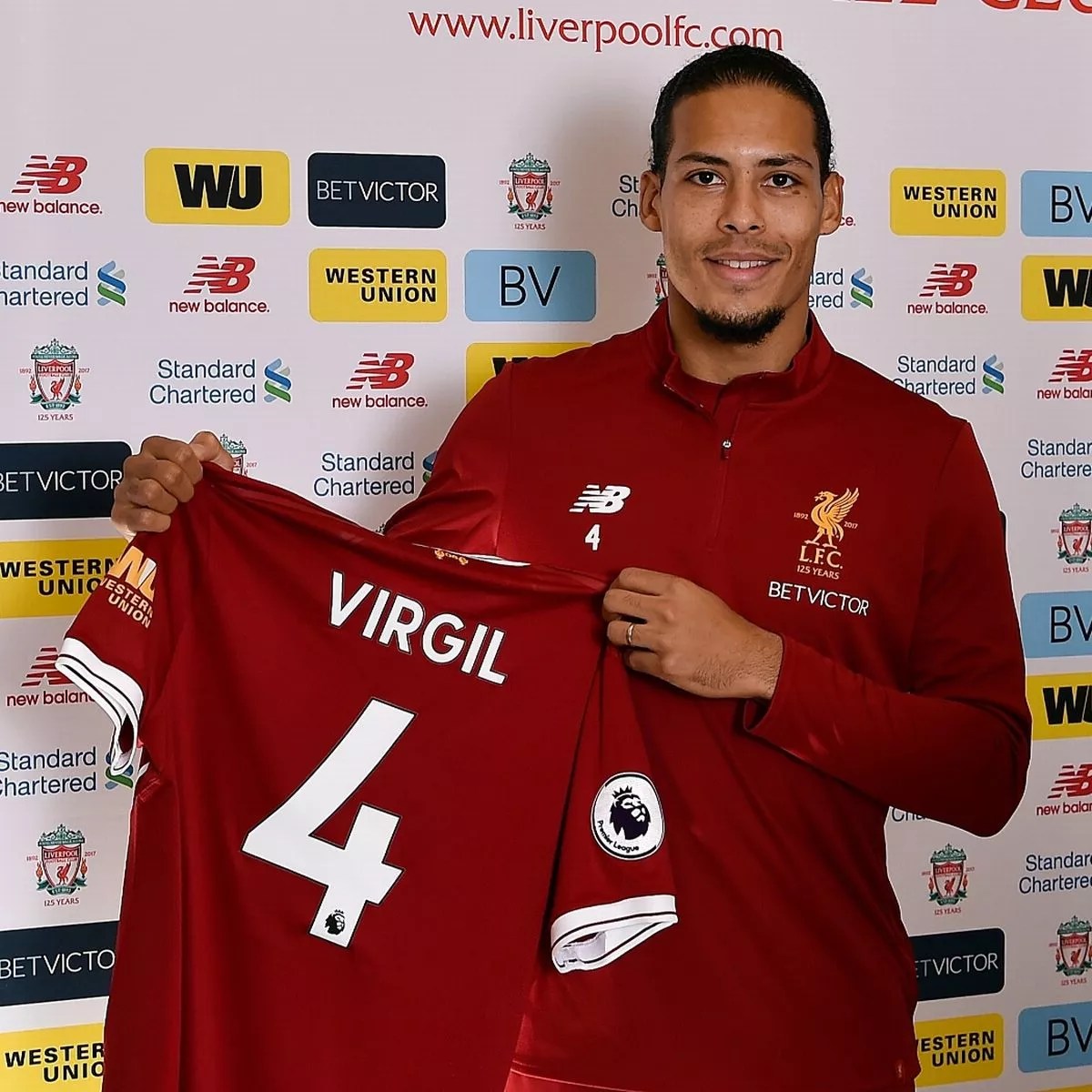
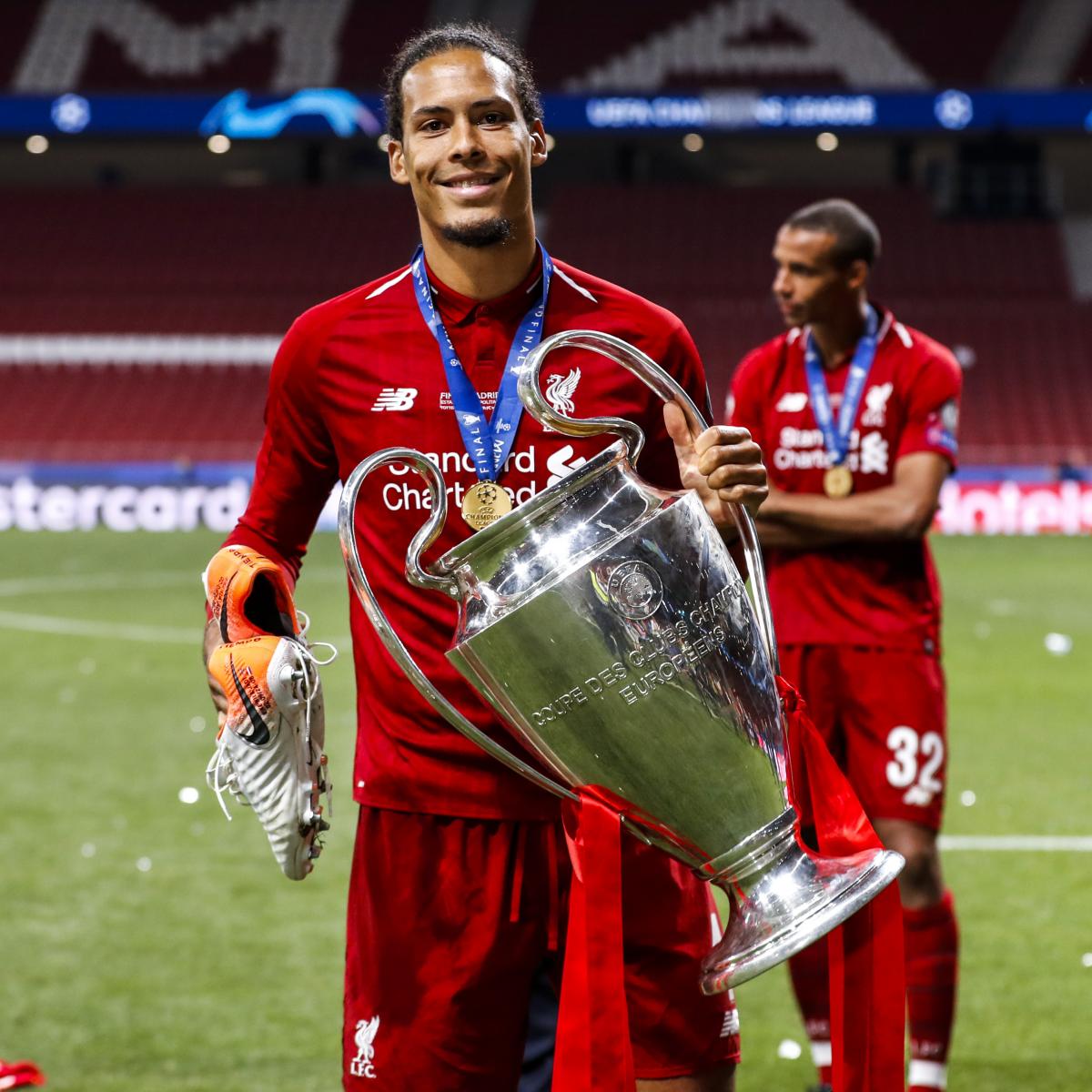
When Virgil van Dijk signed for Liverpool in January 2018, his arrival was met with high expectations, given the massive transfer fee of £75m making him the most expensive defender in history at the time. The Dutch center-back had already established himself as one of the best defenders in the Premier League, and Liverpool’s defense had been a weak point under Jürgen Klopp.
Van Dijk’s impact was immediate and profound. His calmness, leadership, and commanding presence in the center of defense instantly improved Liverpool’s defensive record. Van Dijk became the backbone of the team’s defense, and his partnership with Dejan Lovren, Joe Gomez and later, Joel Matip, helped Liverpool concede fewer goals and become one of the hardest defenses to break down in Europe.
What made van Dijk’s signing so important was not just his individual performances but the overall impact on the team. His arrival solidified Liverpool’s defense and gave Klopp’s side the platform to build on for their subsequent success. In just a year, Liverpool went from a team struggling to find consistency at the back to one of the most formidable defensive units in the world.
Van Dijk’s influence extended beyond the pitch. His leadership, both on and off the field, was vital to the team’s mentality shift. Liverpool went on to win the 2019 UEFA Champions League, with Van Dijk playing a central role in their triumph. In the 2019-2020 season, he helped guide Liverpool to their first-ever Premier League title, ending a 30-year wait for top-flight glory.
Moreover, Van Dijk was named PFA Player of the Year in 2019. His performances were not just about his defensive solidity but also his ability to bring the ball forward, his passing range, and his leadership at the back.
297 appearances for Liverpool (2018-2025)
25 goals scored
1 UEFA Champions League title (2019)
1 Premier League title (2020)
1 UEFA Super Cup (2019)
1 FIFA Club World Cup (2019)
PFA Player of the Year (2019)
2-time UEFA Men’s Player of the Year finalist
Van Dijk’s move to Liverpool in January 2018 has proven to be one of the best winter transfers in history. His leadership, defensive brilliance, and composure under pressure have been essential to Liverpool’s recent success, helping transform them from a team with defensive vulnerabilities into European and domestic champions. The Dutchman’s signing marked the beginning of a new era of dominance for Liverpool, with Van Dijk as one of the key pillars of that success.
4) Andy Cole (Newcastle United to Manchester United, 1995)
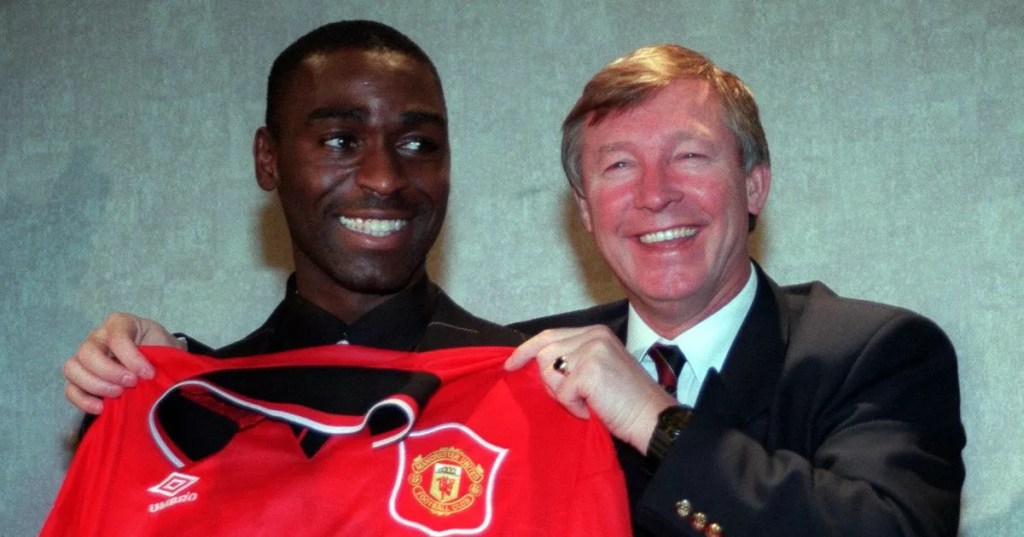
In January 1995, Andy Cole made the move from Newcastle United to Manchester United for a British-record fee at the time of £7 million. The transfer was met with significant attention due to the hefty price tag but Cole had netted 15 goals in the first half of the 1994-95 season for Newcastle, following on from his 41 goals the season before which tempted Fergie to get the cheque book out for his signature.
Cole’s arrival at Manchester United was a key moment in Sir Alex Ferguson’s rebuilding process. The previous season, United had fallen short in the title race, and Ferguson knew he needed a proven goal-scorer to push his team to the next level. Despite a slow start at Old Trafford, Cole soon became one of the most lethal strikers in the Premier League, forming a potent partnership with Eric Cantona, and later, Dwight Yorke.
During his first full season in Manchester, Cole adapted quickly to Ferguson’s style of play and was crucial to United’s 1995-96 Premier League title win. He finished as the league’s second-highest goal scorer that season behind Eric Cantona with 13 goals. But Cole’s real breakthrough season came in 1998, where his partnership with new arrival Dwight Yorke blossomed into one of the best striking partnerships in Premier League history. Together, they formed a prolific duo that helped Manchester United dominate both domestically and internationally.
In the 1998-99 season, Cole played a pivotal role in Manchester United’s historic treble. He scored 24 goals across all competitions and was crucial in United’s Premier League, FA Cup, and Champions League wins.
275 appearances for Manchester United (1995-2002)
121 goals scored
5 Premier League titles (1996, 1997, 1999, 2000, 2001)
2 FA Cups (1996, 1999)
1 UEFA Champions League title (1999)
PFA Team of the Year (2000)
Cole was instrumental in United’s continued dominance of the Premier League under Sir Alex Ferguson. Over the course of his United career, Cole would help the club win 5 Premier League titles, 2 FA Cups, and, most memorably, the 1999 UEFA Champions League, where United completed the treble.
His move from Newcastle to Manchester United proved to be a game-changer. While the transfer initially raised questions about whether Cole could replicate his form at Newcastle, he went on to become one of the club’s all-time greats, cementing his legacy as one of the Premier League’s most prolific and decorated strikers.
5) Patrice Evra (Monaco to Manchester United, 2006)
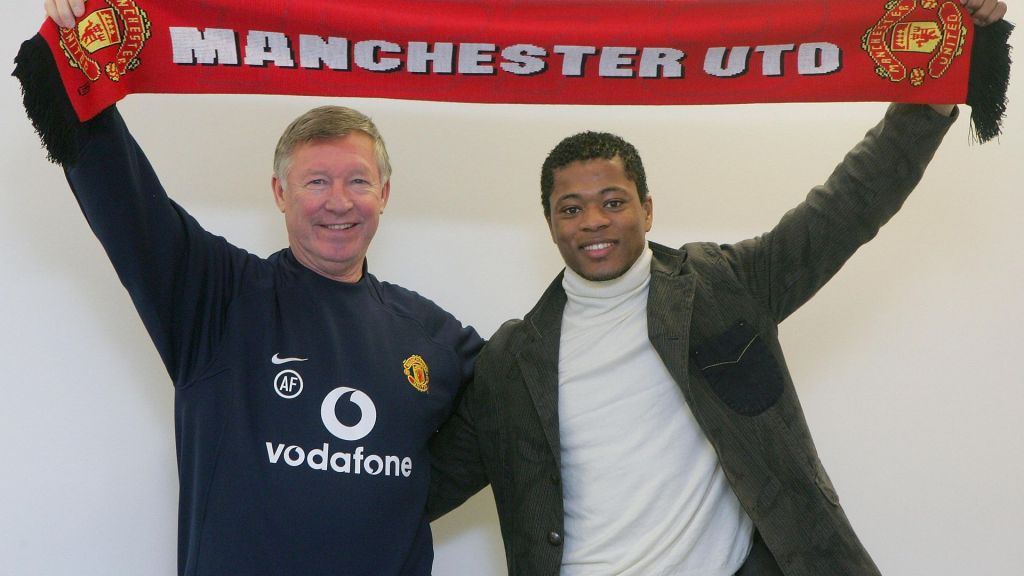
In January 2006, Patrice Evra made the move from AS Monaco in France to Manchester United for a reported fee of £5.5 million. While Evra had been a regular feature in Monaco’s defense and had impressed in European competitions, his move to the Premier League was initially met with some skepticism. At the time, Manchester United were still in the process of rebuilding under Sir Alex Ferguson, and their defense was an area of concern despite the presence of talented players like Rio Ferdinand and Gary Neville.
Evra’s transfer was an example of a signing that immediately paid dividends. He quickly became one of the Premier League’s best left-backs, known for his pace, attacking runs down the flank, and solid defensive performances. Under Sir Alex Ferguson, Evra became the perfect modern full-back, contributing both defensively and in attack.
From the moment he arrived, Evra made an immediate impact on United’s left side. His speed, tireless work rate, and ability to link up with wingers and forwards helped transform the way Manchester United played, particularly in the attacking third. Evra’s attacking runs down the left flank often provided United with an additional dimension in their offensive play, while his defensive solidity ensured that the team was well-covered at the back.
Evra was integral to Manchester United’s resurgence in the late 2000s, helping them win numerous trophies under Sir Alex Ferguson. Over the course of his 8-year stay at the club, Evra won 5 Premier League titles, 3 League Cups, and most notably, the 2008 UEFA Champions League. In the 2007-2008 Champions League campaign, Evra was a key part of United’s defense as they defeated Chelsea in a dramatic final, with the Frenchman contributing both defensively and in attack.
His leadership qualities also came to the forefront as he became one of the senior figures in the dressing room, eventually captaining the club during the later stages of his career. Evra’s ability to maintain his level of performance year after year made him one of the most consistent and respected left-backs in the Premier League, and he continued to be a key player in United’s teams throughout the late 2000s and early 2010s.
Evra’s attacking contributions—providing assists and even scoring a few goals—also cemented his reputation as one of the best full-backs in the world during his time at United. His offensive overlaps were a critical part of United’s wide play, and he became a key figure in the team’s overall tactical setup.
379 appearances across all competitions for Manchester United (2006-2014)
10 goals scored
5 Premier League titles (2007, 2008, 2009, 2011, 2013)
3 League Cups (2006, 2009, 2010)
1 UEFA Champions League (2008)
1 FIFA Club World Cup (2008)
PFA Team of the Year (2007, 2009, 2010)
Patrice Evra’s legacy at Manchester United is defined by his consistency, professionalism, and ability to perform in high-pressure situations. He became one of the top left-backs in the Premier League and a true fan favorite, admired for both his attacking flair and defensive reliability. Beyond his performances on the pitch, Evra’s personality and leadership also left a mark on the club, as he often displayed his passion for Manchester United both on and off the field.
In addition to his success at Manchester United, Evra also had a highly successful international career with France, earning over 80 caps and playing in multiple major tournaments, including the 2006 FIFA World Cup and 2008 UEFA European Championship.
6) Gary Cahill (Bolton Wanderers to Chelsea, 2012)
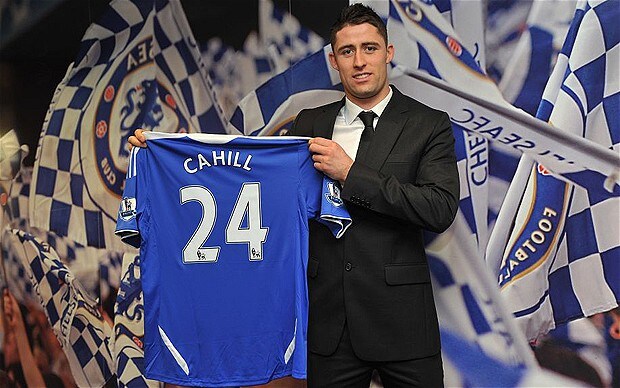
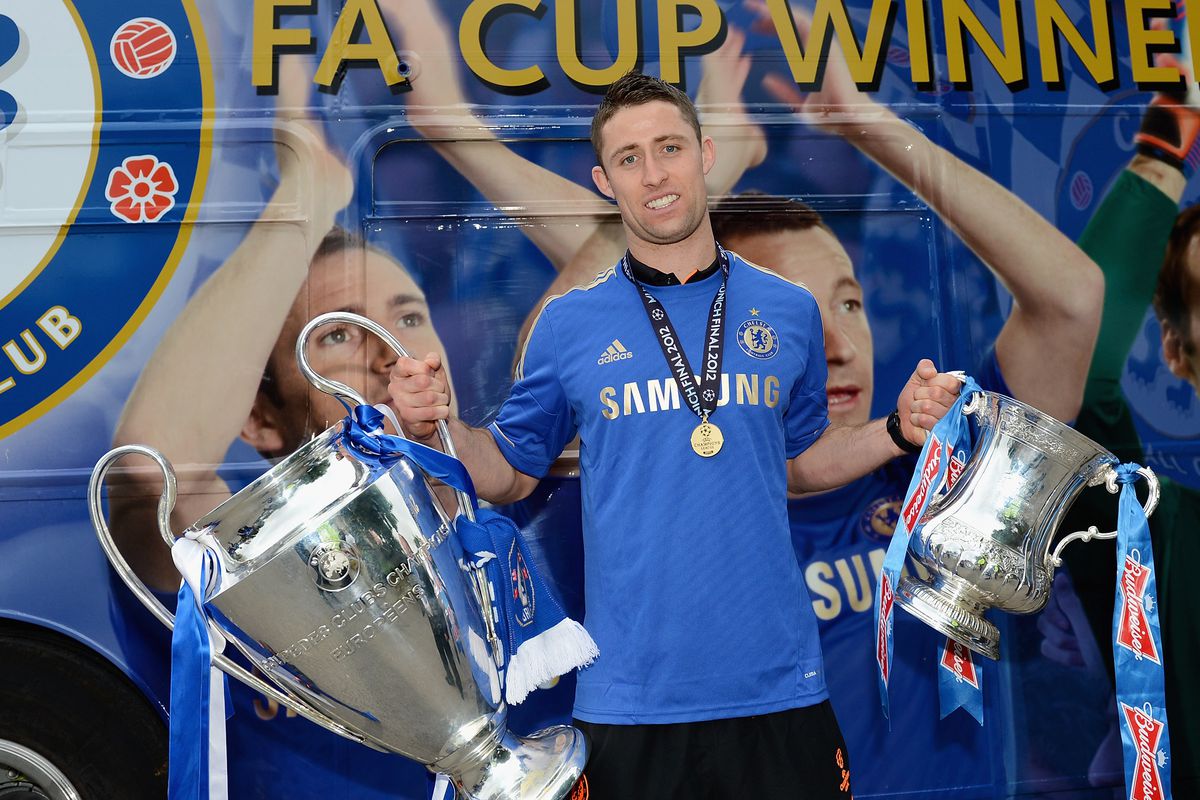
Gary Cahill’s move to Chelsea in January 2012 came at a pivotal moment in both the club’s history and his own career. Having established himself as one of the Premier League’s top central defenders with Bolton Wanderers, Cahill had attracted interest from several top clubs. However, it was Chelsea, then managed by André Villas-Boas, who secured his signature.
The transfer was made in the wake of a season where Chelsea were struggling defensively, and Cahill was seen as a solid addition to bolster the back line. At the time, Chelsea had a defensive core that included the likes of John Terry and Branislav Ivanović, but they needed fresh blood to reinforce their defense as they aimed to challenge for both domestic and European honors.
Cahill’s move to Chelsea was also a turning point in his career, as he was moving to a club that would challenge for top trophies, and the opportunity to play alongside established stars was a significant step up for him. His reputation for being a no-nonsense defender who was both strong in the air and composed with the ball was key to his immediate success at Stamford Bridge.
Cahill wasted little time in making his mark at Chelsea. After joining the club in January 2012, he made an immediate impact, helping to solidify the defense alongside John Terry. Cahill’s steady presence and defensive intelligence provided a much-needed boost for Chelsea, especially in key moments during the club’s remarkable 2011-2012 UEFA Champions League campaign.
Although he had only been at Chelsea for a few months, Cahill was thrust into action in the latter stages of the Champions League, particularly in the knockout rounds. He played a crucial role in the semi-finals and final as Chelsea went on to win their first-ever Champions League title, defeating Bayern Munich in the final on penalties. Cahill’s solid defensive displays in those high-pressure moments helped Chelsea lift the trophy, and the victory would go down as one of the most iconic moments in the club’s history.
Cahill’s most successful season came in the 2014-2015 campaign under manager José Mourinho. Chelsea won the Premier League title that season, with Cahill forming a solid partnership at the back with John Terry. The defensive duo was instrumental in Chelsea’s title-winning season, with Cahill contributing to the team’s league-best defensive record.
Cahill’s leadership qualities began to shine through as he became a key figure in the squad, even if he wasn’t the loudest presence on the pitch. His leadership, especially after the departure of John Terry (who left Chelsea in 2017), made him a central figure in the changing room, and his experience helped guide Chelsea through several crucial matches.
290 appearances in all competitions for Chelsea (2012-2019)
25 goals scored
2 Premier League titles (2015, 2017)
2 FA Cups (2012, 2018)
1 League Cups (2015)
1 UEFA Champions League (2012)
2 UEFA Europa League (2013, 2019)
PFA Team of the Year (2014, 2015, 2017)
Gary Cahill’s role at Chelsea was always defined by his reliability and consistency. While he wasn’t always the most glamorous player on the pitch, his defensive performances were often pivotal. Cahill was known for his no-nonsense defending, clearing crosses, making crucial blocks, and being an aerial threat in both boxes.
His partnership with John Terry was one of the Premier League’s best in the early to mid-2010s. While Terry was the more vocal leader of the two, Cahill complemented him with his own brand of solid defending and composure on the ball. Cahill’s ability to read the game and position himself well allowed him to play a pivotal role in Chelsea’s defensive success, especially in their domestic and European triumphs.
Cahill’s defensive maturity was particularly important in Chelsea’s 2016-2017 Premier League title-winning campaign under Antonio Conte. Although he was now entering the latter stages of his career at Chelsea, Cahill continued to provide leadership and stability at the back. He also adapted to the team’s tactical system, with Chelsea switching to a 3-4-3 formation, and Cahill played a key role as part of the three-man defense alongside David Luiz and César Azpilicueta.
By the time Cahill left Chelsea in 2019 after a successful eight-year spell, he had established himself as one of the club’s most decorated players, having won two Premier League titles, one Champions League title, two FA Cups, and two League Cups. His contributions to Chelsea’s defense were immeasurable, and his legacy at the club is cemented as one of the most reliable and respected defenders in the club’s history.
7) Bruno Fernandes (Sporting CP to Manchester United, 2020)
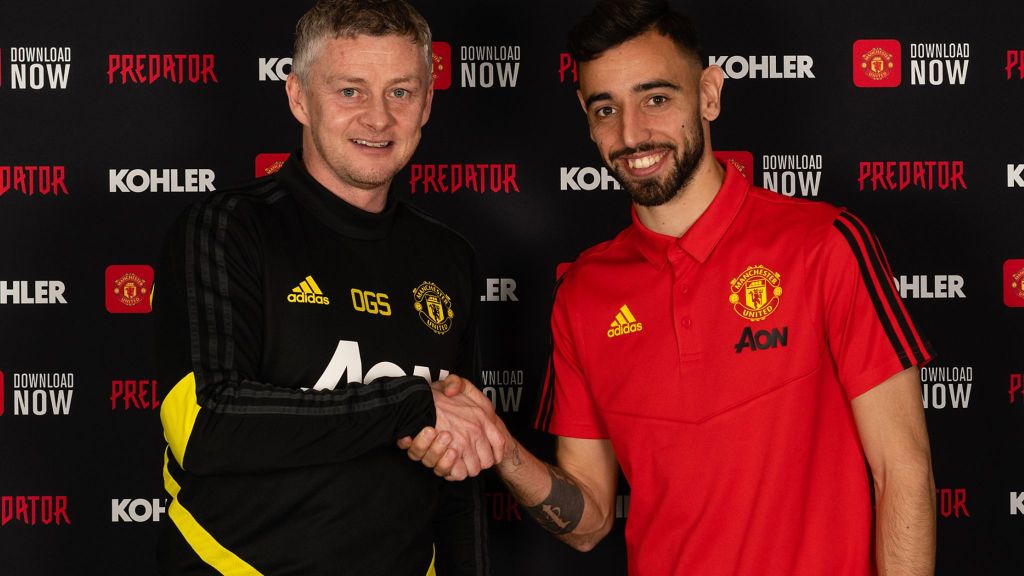
In January 2020, Manchester United completed the signing of Bruno Fernandes from Sporting CP for a reported fee of £47 million, which was widely seen as a significant investment in the club’s midfield. Fernandes’ arrival proved to be one of the most important and transformative signings in United’s recent history. His leadership, vision, and ability to score from midfield immediately filled a gap that had been glaringly obvious for years at Old Trafford.
Bruno quickly adapted to the Premier League and became the creative heartbeat of Manchester United’s attack, known for his incredible passing range, set-piece prowess, and knack for scoring goals. His impact was immediate, as he became the focal point of United’s midfield, scoring goals and creating chances with ease. Fernandes helped United finish third in the 2019-2020 season and played a pivotal role in their 2020-2021 campaign, where they finished second in the Premier League.
Bruno’s influence extended to European competitions as well, as he was instrumental in United’s run to the Europa League final in 2021. His leadership on the pitch, combined with his consistent output of goals and assists, has made him a fan favorite and one of the Premier League’s top midfielders.
262 appearances (as of January 2025)
86 goals scored and 52 assists
1 FA Cup (2024)
1 EFL Cup (2023)
Bruno Fernandes has undoubtedly been one of the most successful January transfers in Premier League history, making an immediate impact and quickly becoming a cornerstone of Manchester United’s rebuilding efforts. So, when discussing the top January transfers, Bruno Fernandes undoubtedly belongs in the conversation.
8) Philippe Coutinho (Inter Milan to Liverpool, 2013)


In January 2013, Philippe Coutinho made the switch from Inter Milan to Liverpool for a relatively modest fee of £8.5 million. At the time, Coutinho was a young, talented Brazilian playmaker who had shown flashes of brilliance at Inter but struggled to consistently break into the starting lineup. Despite his potential, many questioned whether the move to the Premier League was the right one for him.
However, from the moment Coutinho arrived at Anfield, it was clear that Liverpool had unearthed a gem. His vision, dribbling ability, and flair made him an immediate fan favorite, and his performances began to improve with every match. Coutinho quickly became one of Liverpool’s most influential players, despite his relatively young age.
Coutinho’s arrival was key in the transformation of Liverpool’s attack under Brendan Rodgers, who was in charge at the time. Rodgers was trying to implement a style of football based on quick passing, fluid movement, and creating chances from midfield, and Coutinho was the perfect fit for that philosophy. His ability to pick out key passes, combined with his dribbling and long-range shooting, made him a standout player in the Premier League.
He scored a number of stunning goals, including some memorable long-range strikes, and quickly became the creative force behind Liverpool’s attacking play. Coutinho formed strong partnerships with players like Luis Suárez and Daniel Sturridge, with the trio driving Liverpool to an impressive second-place finish in the Premier League during the 2013-14 season. This season, in particular, was when Coutinho’s talent truly shone. His ability to unlock opposition defenses and create chances helped elevate Liverpool’s offensive game to new heights.
Coutinho’s time at Liverpool also coincided with the club’s rebuild, and his performances played a key role in their progression towards becoming a genuine contender for the Premier League and European titles. Over his five years at Liverpool, Coutinho became the club’s talisman, contributing both goals and assists at crucial moments.
201 appearances for Liverpool (2013-2018)
54 goals sccored and 38 assists
Coutinho’s legacy at Liverpool is undeniable. His skill, creativity, and knack for producing magical moments made him a beloved figure at Anfield. However, his eventual move to FC Barcelona in January 2018, for a massive fee of £142 million, marked the end of his Anfield chapter. While Coutinho’s departure was disappointing for many Liverpool fans, the transfer ultimately funded key signings such as Virgil van Dijk and Alisson Becker, both of whom were instrumental in Liverpool’s eventual success, including their 2019 UEFA Champions League and 2020 Premier League titles.
9) Seamus Coleman (Sligo Rovers to Everton, 2009)

In January 2009, Seamus Coleman made a relatively low-key move from Sligo Rovers in Ireland to Everton in the Premier League for a modest fee of just £60,000. At the time, Coleman was an unheralded young right-back playing in the League of Ireland, and few expected him to make a significant impact at a club like Everton, competing in the Premier League.
However, what followed was one of the most remarkable stories of a player’s rise in recent Premier League history. Initially, Coleman was seen as a raw talent, and many expected him to develop gradually under the guidance of Everton’s then-manager David Moyes. After being brought in as a winger, Coleman was soon converted to a right-back, a position that he would go on to make his own. It was a decision that proved to be inspired, as Coleman’s pace, stamina, and attacking prowess quickly made him one of the best right-backs in the Premier League.
Despite Everton’s mid-table struggles at times during his early years, Coleman stood out for his consistent performances, contributing both defensively and offensively. His runs down the right flank, combined with his ability to whip in dangerous crosses, made him a key part of Everton’s team.
Seamus Coleman developed into one of the most reliable and consistent players for Everton over the next decade. He became a key figure in the team’s defense, offering a threat going forward while also being solid at the back. His leadership qualities saw him earn the Everton captaincy in 2019, a role he held with pride for several seasons.
Under his captaincy, Coleman helped Everton navigate the ups and downs of the Premier League, with his consistency and professionalism being key to the club’s overall stability. Although his performances didn’t always result in silverware, Coleman became one of the Premier League’s most dependable right-backs, and his longevity at the top level is a testament to his ability and commitment.
Coleman’s influence extended to international football as well. For Republic of Ireland, he became a stalwart of the national team, helping them qualify for major tournaments, including Euro 2016, where they reached the knockout stages. His leadership on the international stage mirrored his importance at Everton.
426 appearances for Everton (as of January 2025)
28 goals scored
Seamus Coleman’s transfer to Everton in January 2009 is a classic example of a low-key January signing that exceeded expectations. For a fee of just £60,000, Coleman became one of the best right-backs in the Premier League and established himself as a club legend at Everton. His story is one of hard work, determination, and the right combination of talent and mentality, and he is widely regarded as one of the best value-for-money transfers in Premier League history.
10) Clint Dempsey (New England Revolution to Fulham, 2007)

In January 2007, Clint Dempsey made the move from the MLS side New England Revolution to Fulham in the Premier League for a reported fee of around £2 million, a reasonable amount for a player coming from an MLS team at the time. Dempsey, who had impressed with his performances for the U.S. national team during the 2006 World Cup, was seen as a potential talent in the making for the Premier League, but many had doubts about whether he could make the leap from MLS to one of the toughest leagues in the world.
However, Dempsey proved all doubters wrong. From the very beginning, he adapted quickly to the physicality and pace of the Premier League. His technical ability, agility, and eye for goal made him an immediate threat, and his versatility allowed him to play in various attacking positions, whether as a forward or a midfielder.
Dempsey’s first season at Fulham was a solid one, but it was in subsequent years that he truly made his mark. He quickly became one of Fulham’s most important players, offering creativity, energy, and a consistent goal-scoring threat. Known for his fearless playing style, Dempsey was never afraid to take on defenders or shoot from distance, and he developed a knack for scoring crucial goals in important matches.
His standout moment came in the 2009-10 season, when he played a key role in Fulham’s remarkable run to the UEFA Europa League Final. Dempsey was integral to Fulham’s attacking play, scoring vital goals, including an iconic header against Juventus in the Round of 16, which helped Fulham complete a dramatic comeback. Though Fulham lost to Atlético Madrid in the final, Dempsey’s performances throughout the competition earned him widespread praise, and he had firmly established himself as one of the Premier League’s top attacking players.
Dempsey’s legacy at Fulham was cemented by his consistent performances, leadership, and goal-scoring ability. He became the club’s most influential player during his time at Craven Cottage and remains one of their all-time greats. Over his five years at Fulham, Dempsey was involved in some of the club’s most memorable moments, including his role in their historic escape from relegation and their impressive European run.
231 appearances in all competitions (2007-2012)
60 goals scored and 13 assists
1-time Fulham Player of the Season (2011-12)
Dempsey’s success at Fulham did not go unnoticed by the U.S. national team, where he was a key figure for years. He went on to become the all-time leading goal scorer for the United States Men’s National Team (as of 2025), with over 50 goals in international competitions. His contributions to the U.S. in various World Cups and CONCACAF tournaments helped elevate the profile of American soccer, and he remains a beloved figure in the country’s soccer history.
After Fulham, Dempsey moved to Tottenham Hotspur in 2012, where he enjoyed a successful stint before returning to the MLS with Seattle Sounders, where he would finish his career. However, his time at Fulham remains the most significant period of his club career, where he was not only the team’s talisman but also one of the most well-known American players in Europe during his time in London.
That’s our top 10 but who have we missed, let us know in the comments below!
SHOP a huge range of retro classics at 3Retro.com

 thehexblog.com