
The FIFA World Cup is football’s greatest prize, contested every four years since 1930 and won by only eight nations in 22 tournaments. This complete guide covers World Cup history from Uruguay 1930 to North America 2026, including every winner, the top 10 nations by match wins, all-time top scorers, the most carded teams, and the tournament’s most fascinating facts.
There is no sporting prize quite like the World Cup. Every four years, the globe stops spinning for a month and revolves instead around a golden trophy, a patch of grass, and ninety minutes of hope. Since 1930, the men’s FIFA World Cup has handed out just 22 championships to only eight nations, a startling concentration of glory that makes football’s greatest stage as exclusive as it is beloved.
This is the story of that tournament: how it grew from a thirteen-team curio in Uruguay into a 48-nation, 104-match mega-event stretching across three North American countries in 2026. Pour a brew, settle in, and let’s walk through nearly a century of World Cup history.
The Tournament’s Evolution: A Century in Eras
1930–1938: The Pioneer Years
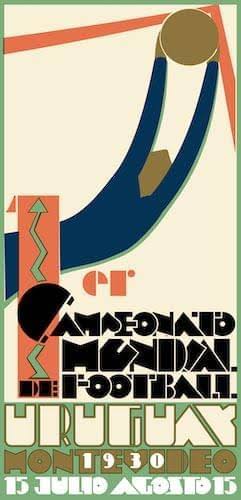
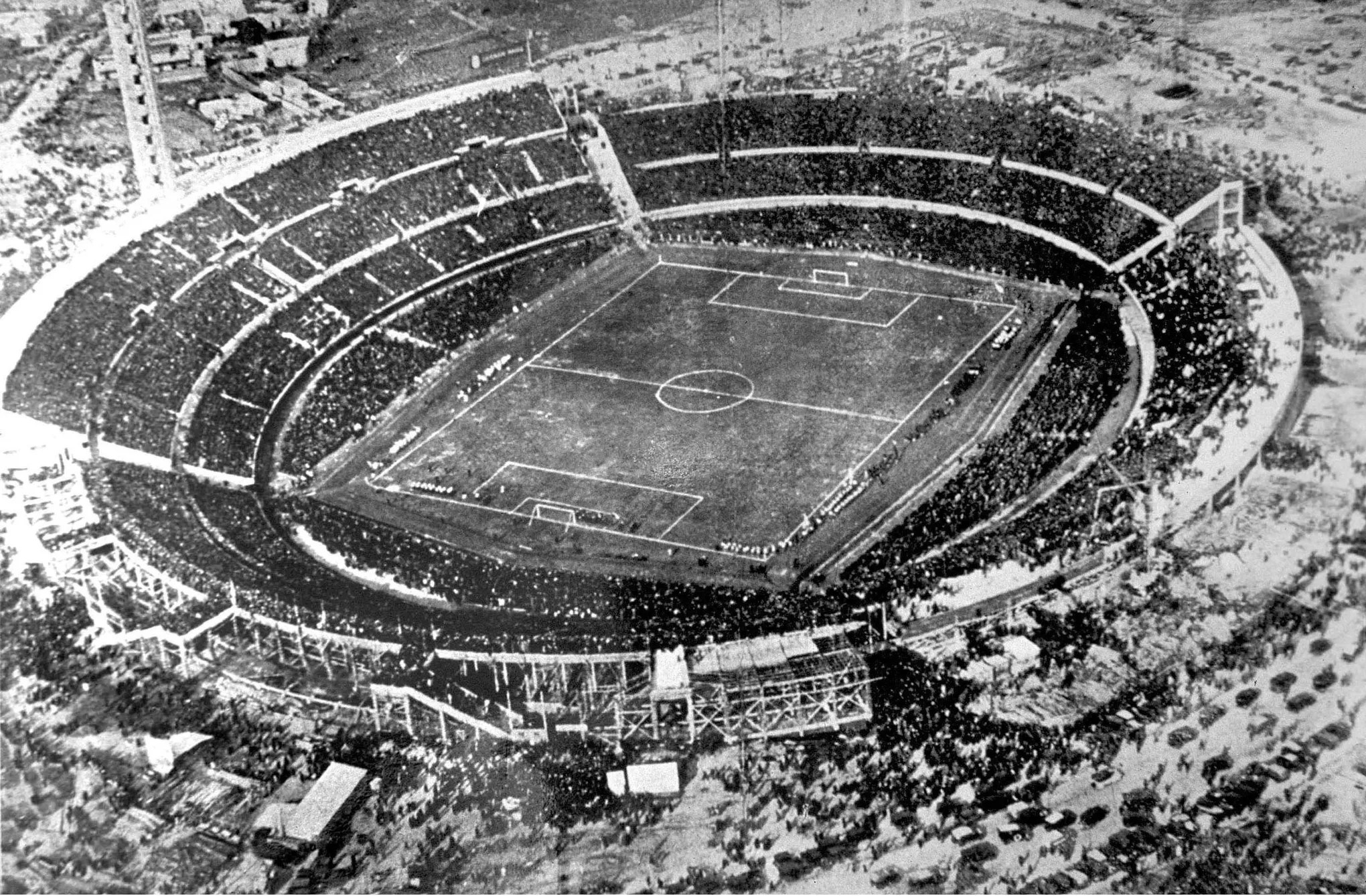
The first World Cup was the brainchild of Jules Rimet, the French FIFA president who dreamt of a truly global football championship. Just thirteen teams made the trip to Uruguay in 1930, only four from Europe, deterred by a three-week boat crossing, and the hosts duly lifted the trophy, beating neighbours Argentina 4-2 in Montevideo. Italy then stamped their authority on the 1930s, winning back-to-back titles at home in 1934 and in France in 1938 under Vittorio Pozzo, the only manager to win two World Cups.
1942–1946: The Silence
War brought the tournament to a halt. The 1942 and 1946 editions were cancelled, leaving a six-year gap that reminds us the World Cup has never been immune to world events.
1950–1962: The Maracanazo, the Miracle of Bern, and the Rise of Brazil
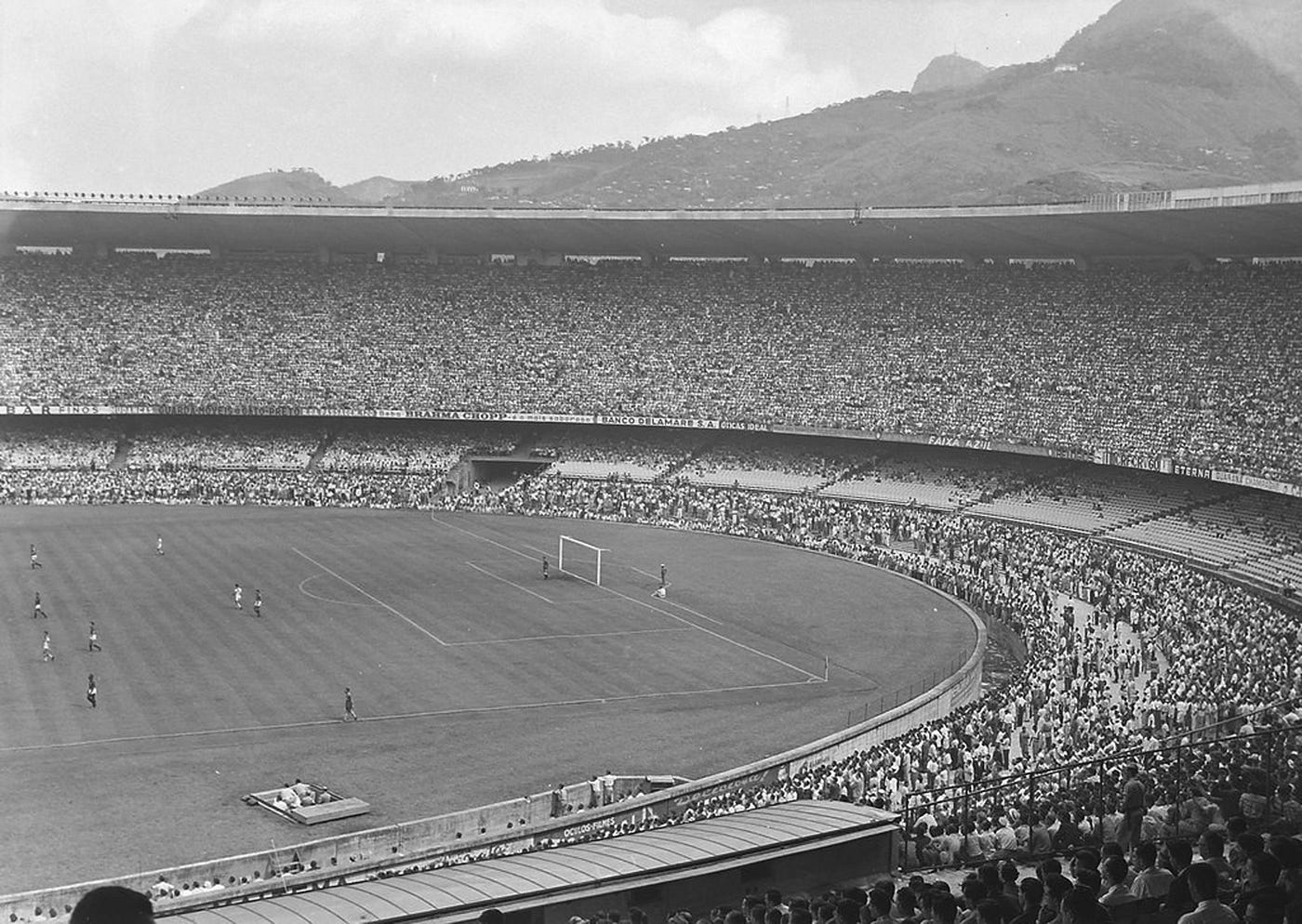
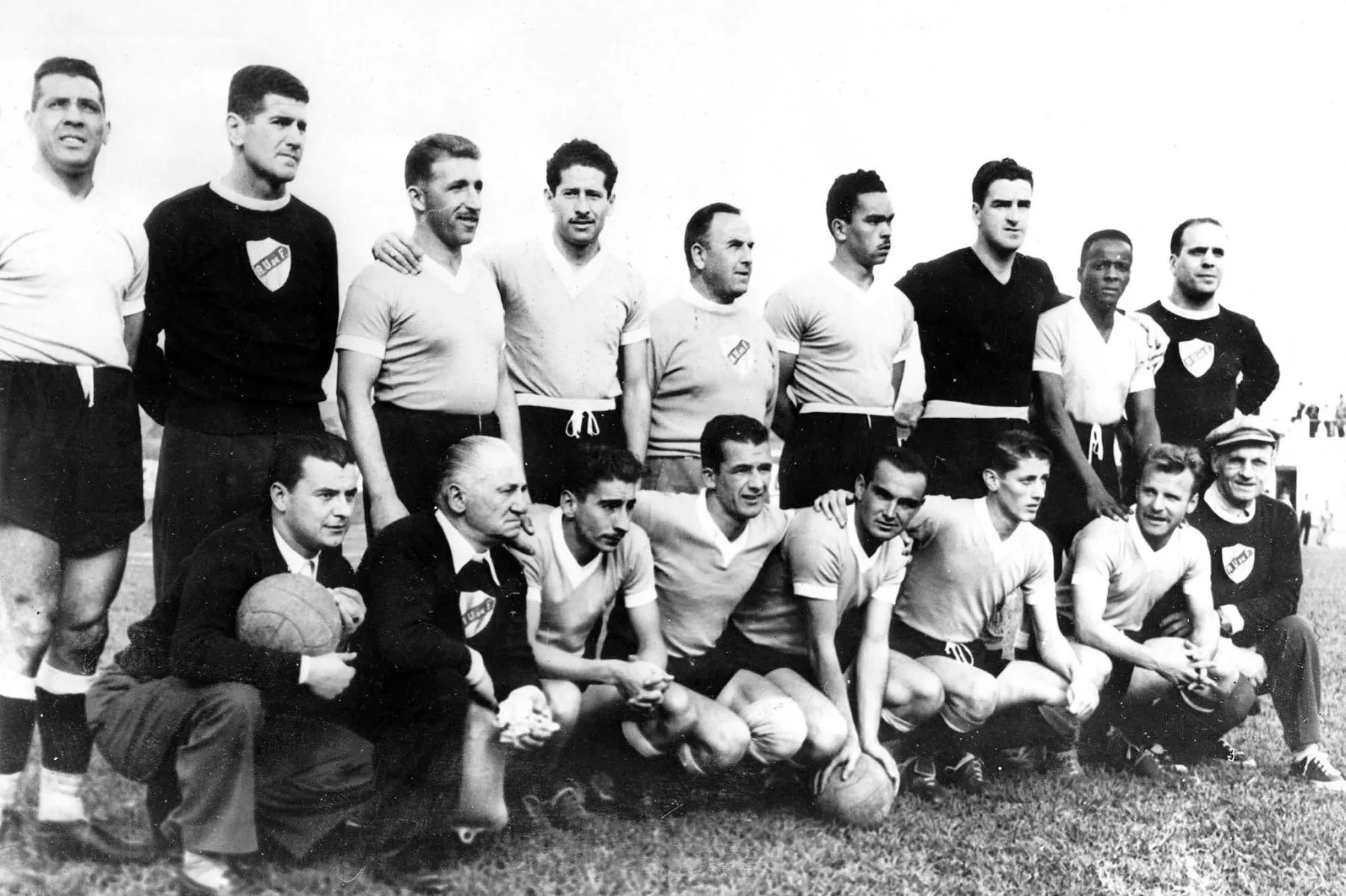
Football returned with a shock. At the Maracanã in Rio, Uruguay silenced roughly 200,000 Brazilians by beating the hosts 2-1 in the decisive final-group match, the “Maracanazo,” still the most famous upset in World Cup history.
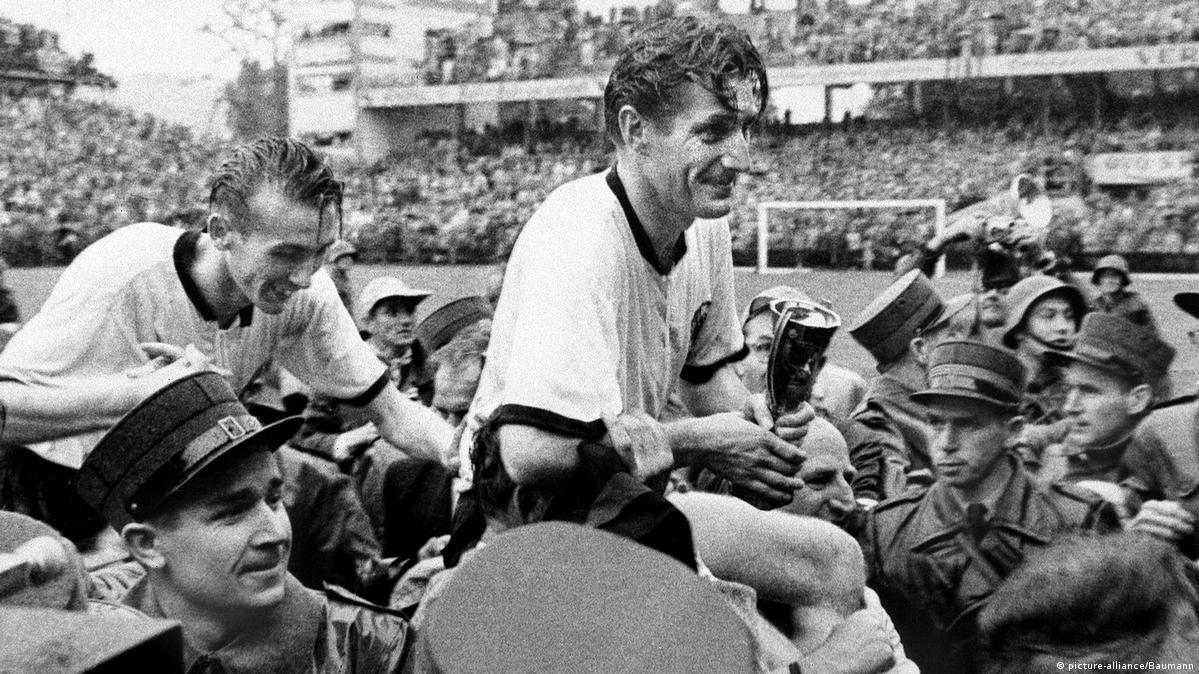
Four years later in Switzerland came the “Miracle of Bern.” Hungary’s “Golden Team,” led by Ferenc Puskás and the prolific Sándor Kocsis, whose 11 goals topped the scoring charts, had gone four years unbeaten and hammered West Germany 8-3 in the group stage. Yet in the final, Helmut Rahn struck twice as a rebuilt German side came from 2-0 down to win 3-2, a result Germany still celebrates as a kind of national rebirth barely a decade after the war.
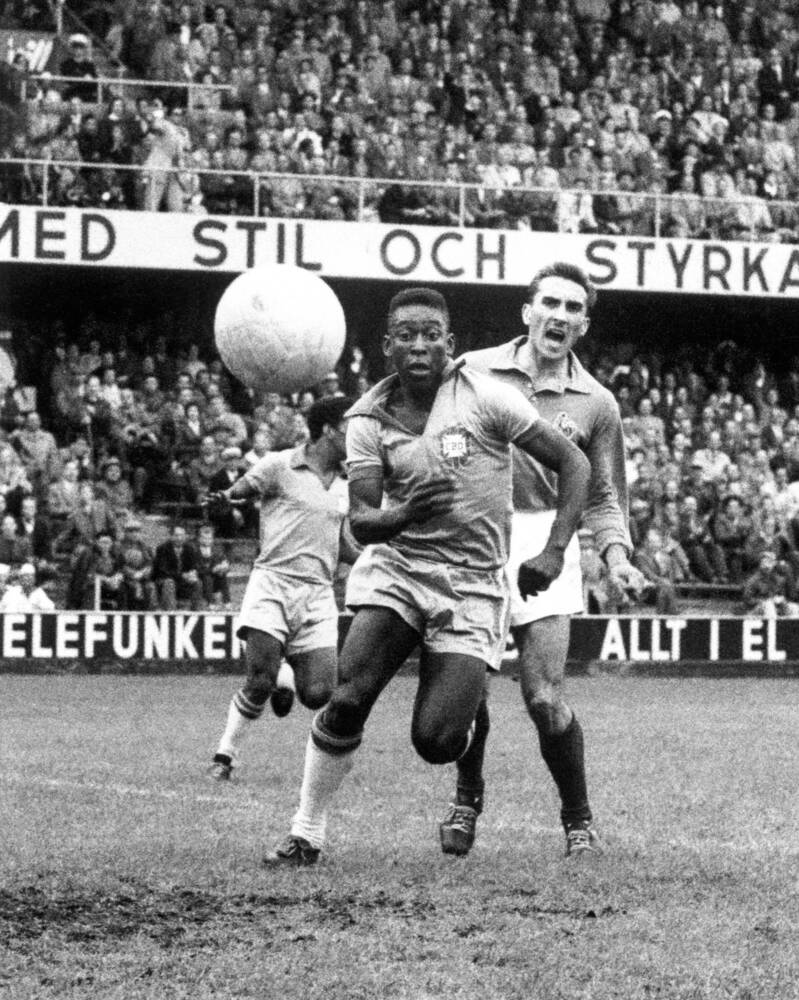
Then came Brazil’s golden age. Pelé, just 17, announced himself in 1958 as Brazil won in Sweden, scoring a semi-final hat-trick and a final brace. They retained the trophy in Chile in 1962 even after Pelé was injured in the group stage, with Garrincha’s wing wizardry carrying them through.
1966–1978: Tactical Modernisation and the Greatest of All
England’s 1966 triumph on home soil, Geoff Hurst’s final hat-trick and all, gave the nation its one and only title, while Eusébio’s nine goals lit up the tournament for Portugal.
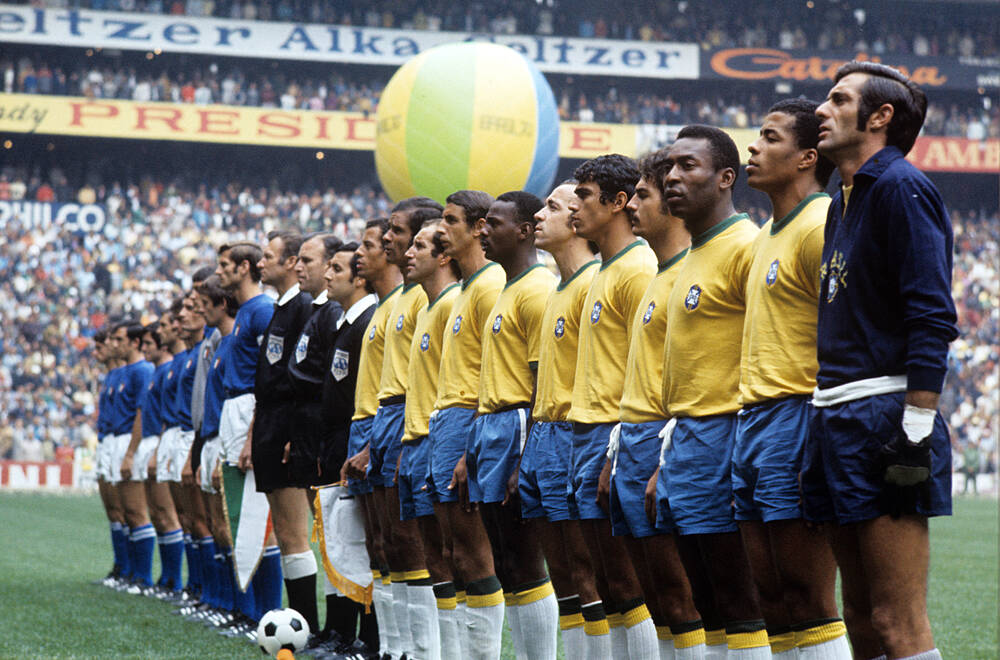
Mexico 1970 gave the world the team many still call the greatest ever. Brazil, in their iconic canary shirts, swept to a third title with a side starring Pelé, Tostão, Jairzinho (who scored in every round), and Carlos Alberto, whose thunderous finish to seal the 4-1 final win over Italy is replayed to this day. It was the first World Cup broadcast in colour, and Brazil were allowed to keep the Jules Rimet Trophy outright for winning it three times.
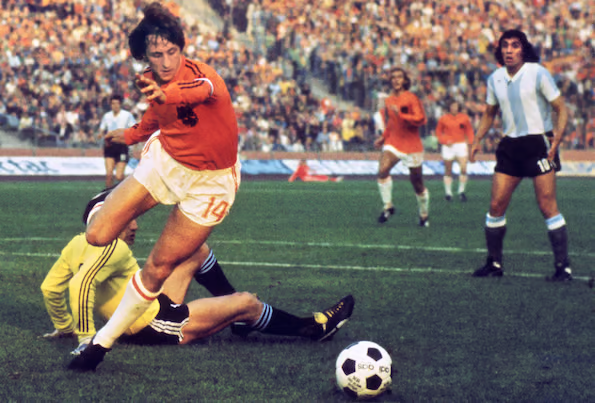
The 1970s then brought tactical revolution. The Dutch “Total Football” of Rinus Michels and Johan Cruyff lit up 1974, though host nation West Germany took the trophy, and Argentina won amid controversy on home soil in 1978, the decade’s second host triumph.
1982–1998: Global Expansion
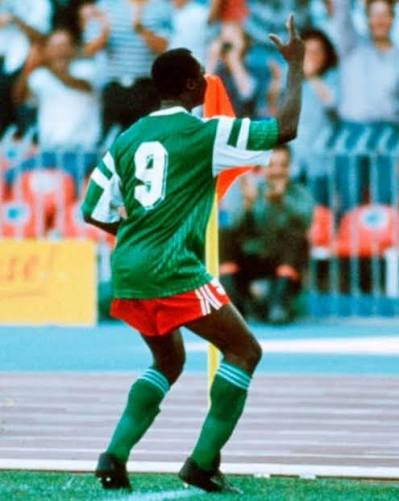
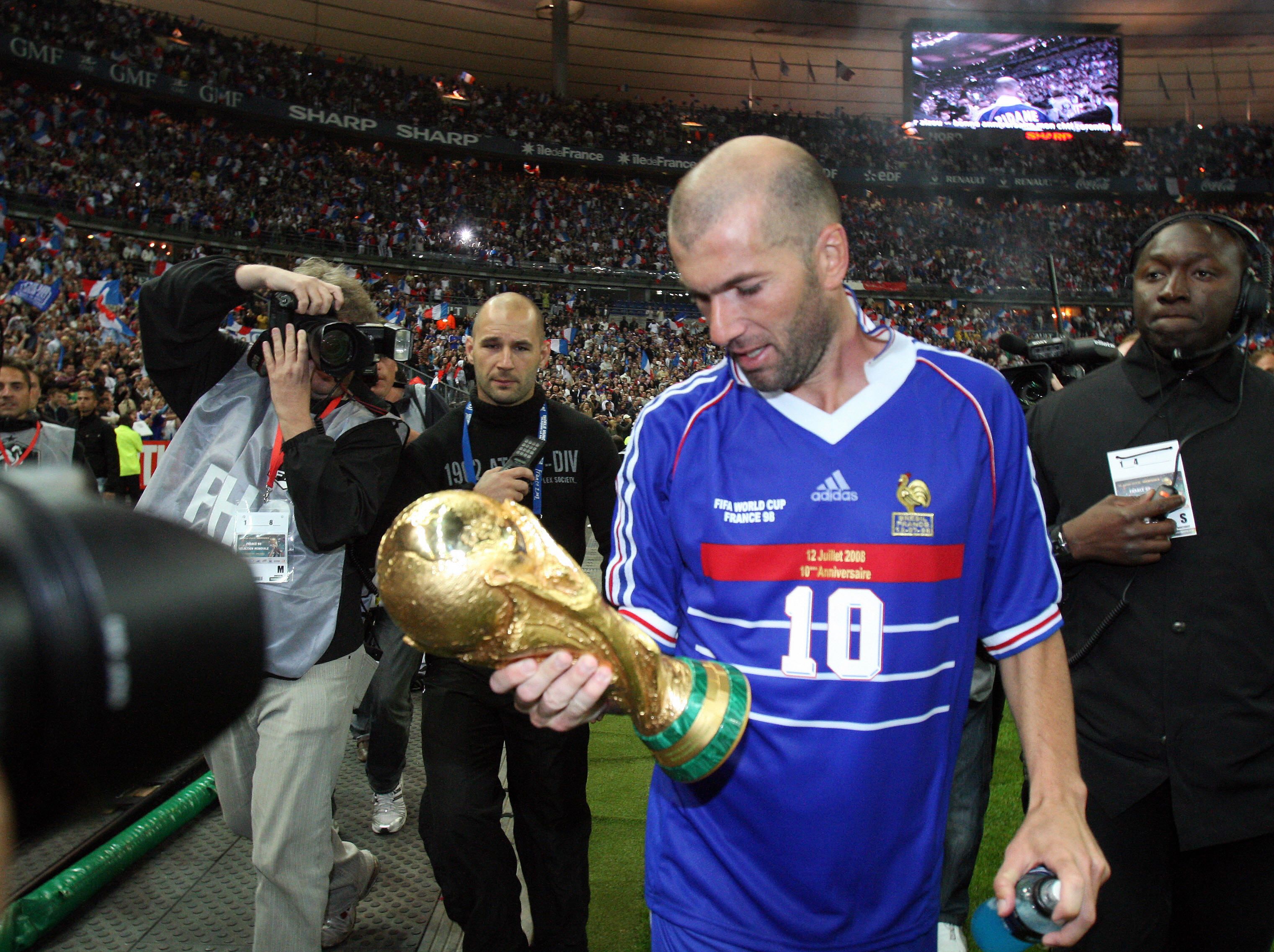
The tournament ballooned from 24 teams in Spain 1982 to 32 in France 1998, opening the door to African and Asian nations, and produced a string of unforgettable editions.
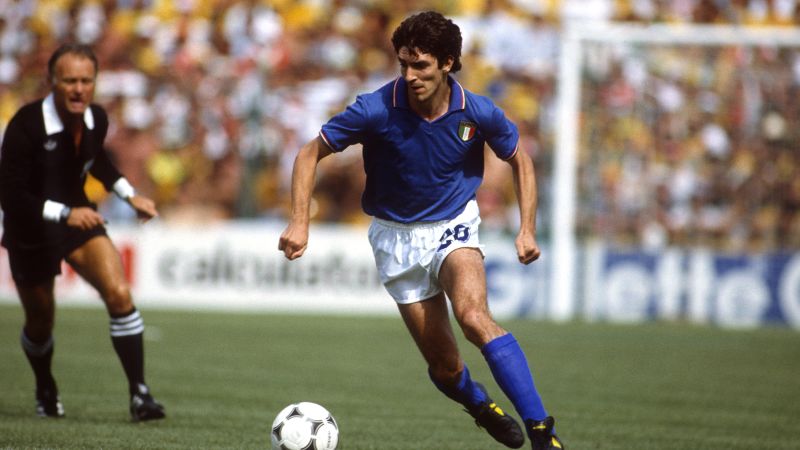
Spain 1982: belonged to Paolo Rossi. Returning from a betting ban just before the tournament, Rossi exploded into life with a hat-trick against Brazil, four goals across the knockout stage, and the opener in a 3-1 final win over West Germany that gave Italy their third title. The finals also delivered one of the great shocks as Algeria beat West Germany, and Northern Ireland stunned hosts Spain.
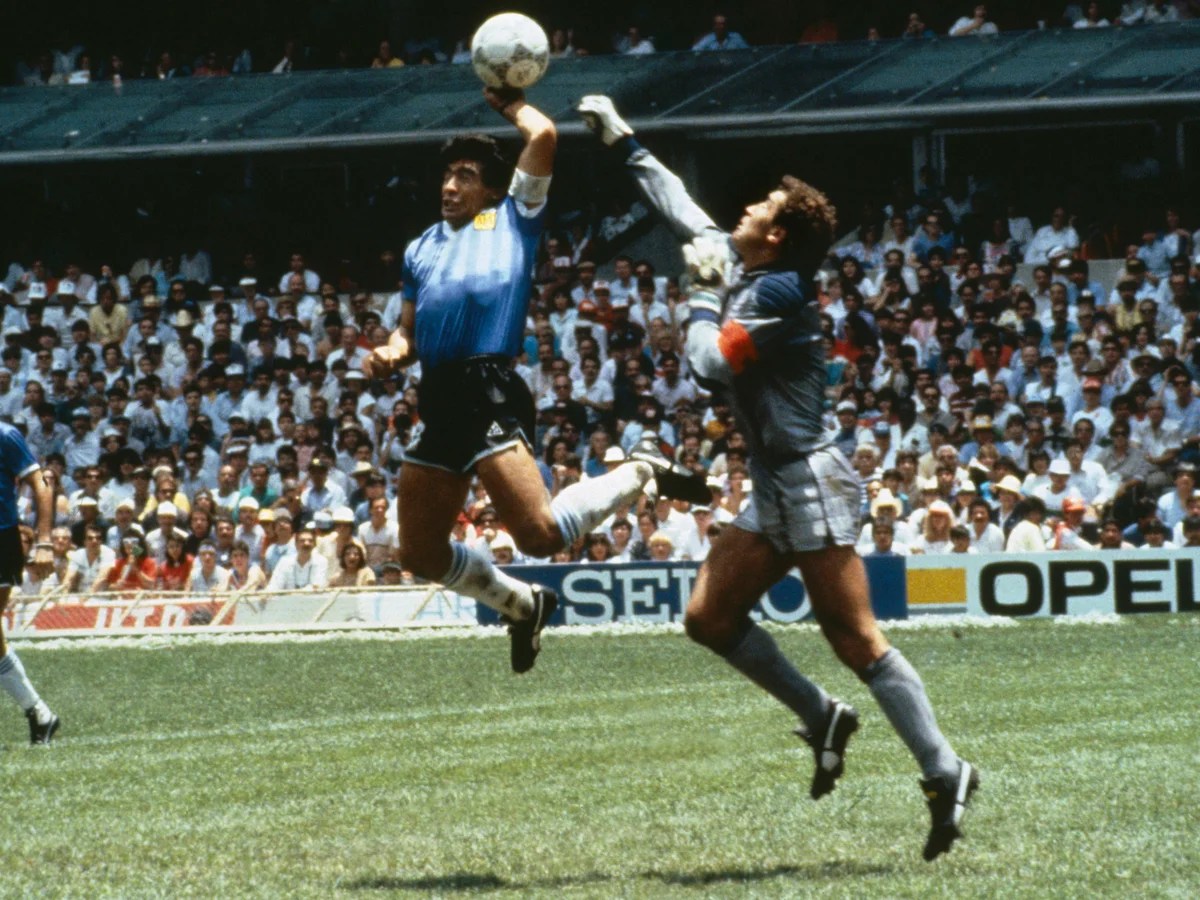
Mexico 1986: was Diego Maradona’s tournament. Almost single-handedly, he dragged Argentina to the title, eliminating England in a quarter-final that contained both the infamous “Hand of God” and his mesmerising “Goal of the Century,” before seeing off West Germany in the final.
Italy 1990: was a dour, defensive affair remembered for its drama rather than its goals, at a record-low 2.21 per game. Cameroon’s Indomitable Lions, with 38-year-old Roger Milla, became the first African side to reach the quarter-finals. England reached their first semi-final in 24 years, falling to West Germany on penalties, and Franz Beckenbauer’s side avenged 1986 by beating Argentina 1-0 in a grudge-match final.
USA 1994: broke attendance records and handed Brazil their fourth title after a goalless final settled on penalties, with Roberto Baggio’s skied miss sealing Italy’s heartbreak. Romário and Bebeto’s cradle celebration, Maradona’s mid-tournament doping ban, and a teenage Ronaldo on the bench all added colour to a tournament that mainstreamed football in America.
France 1998: marked the expansion to 32 teams and a first title for the hosts. Zinedine Zidane’s two first-half headers stunned Brazil in a 3-0 final played under a cloud of mystery around Ronaldo’s pre-match seizure. A multi-ethnic French side, led by Zidane, Didier Deschamps, and Lilian Thuram, whose two semi-final goals beat Croatia, turned the Parisian night into a national party.
2002–2022: The Modern Era
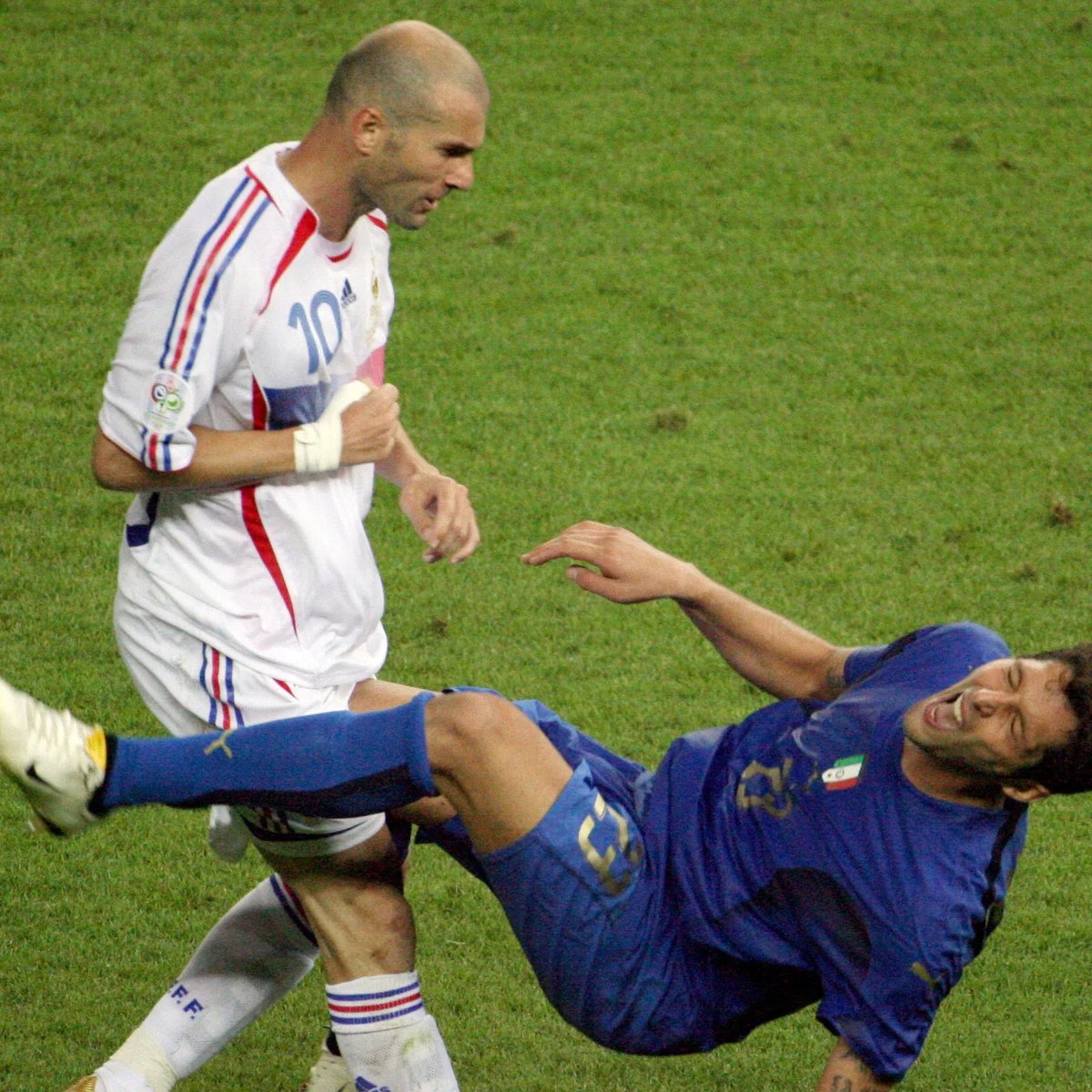
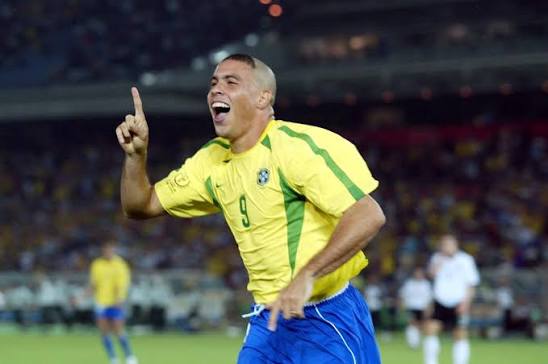
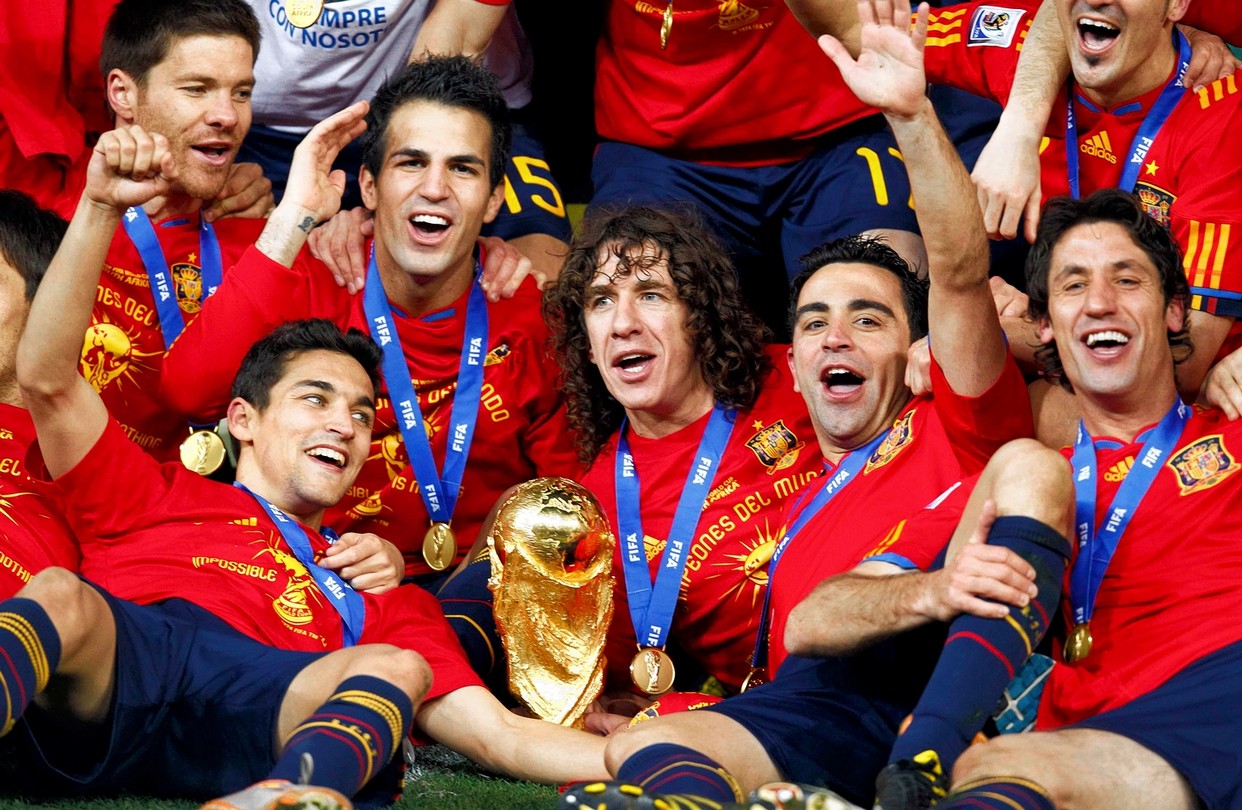
The World Cup left its traditional heartlands for Asia (2002, co-hosted by South Korea and Japan) and the Middle East (Qatar 2022, the first winter edition).
South Korea/Japan 2002: was Ronaldo’s redemption. Four years after his final nightmare, the buck-toothed striker finished with eight goals, including both in a 2-0 final win over Germany, as Brazil claimed their fifth, and so far most recent, title. Guus Hiddink’s South Korea reached a semi-final no Asian side had reached before, Turkey finished third on their first appearance in 48 years, and holders France went home without scoring a single goal.
Germany 2006: delivered a summer of “Sommermärchen,” a fairy tale that rehabilitated the host nation’s image. Italy claimed their fourth title, edging France 5-3 on penalties after a 1-1 final forever remembered for Zinedine Zidane’s extra-time headbutt on Marco Materazzi in his final professional match. Fabio Cannavaro, lifting the trophy as captain, became one of the few defenders to claim the Ballon d’Or that year.
Spain’s tiki-taka dynasty was crowned in 2010, Germany’s next generation in 2014, and France in 2018. Then, in 2022, Lionel Messi finally completed his career in Qatar, lifting the trophy after a 3-3 final against France decided on penalties, arguably the greatest final ever played.
2026: The North American Mega-Tournament
The 2026 edition, co-hosted by the United States, Canada, and Mexico, is the biggest World Cup ever staged. A record 48 teams are contesting 104 matches over 39 days, from the opening fixture in Mexico City on 11 June to the final at the MetLife Stadium in New York/New Jersey on 19 July. Argentina arrived as defending champions, Brazil are chasing a record sixth title, and a new-look knockout phase began with a round of 32. The tournament is being played out as we speak, due to conclude on 19 July 2026.
All-Time World Cup Winners: Every Final, 1930–2022
Only eight nations have ever lifted the trophy. Below is the complete roll of honour through the 2022 tournament in Qatar, the last completed final. (The 2026 champion will be decided on 19 July 2026.)
| Year | Host | Winner | Score | Runner-up |
|---|---|---|---|---|
| 1930 | Uruguay | Uruguay | 4-2 | Argentina |
| 1934 | Italy | Italy | 2-1 (aet) | Czechoslovakia |
| 1938 | France | Italy | 4-2 | Hungary |
| 1950 | Brazil | Uruguay | 2-1 | Brazil |
| 1954 | Switzerland | West Germany | 3-2 | Hungary |
| 1958 | Sweden | Brazil | 5-2 | Sweden |
| 1962 | Chile | Brazil | 3-1 | Czechoslovakia |
| 1966 | England | England | 4-2 (aet) | West Germany |
| 1970 | Mexico | Brazil | 4-1 | Italy |
| 1974 | West Germany | West Germany | 2-1 | Netherlands |
| 1978 | Argentina | Argentina | 3-1 (aet) | Netherlands |
| 1982 | Spain | Italy | 3-1 | West Germany |
| 1986 | Mexico | Argentina | 3-2 | West Germany |
| 1990 | Italy | West Germany | 1-0 | Argentina |
| 1994 | USA | Brazil | 0-0 (3-2 pens) | Italy |
| 1998 | France | France | 3-0 | Brazil |
| 2002 | South Korea/Japan | Brazil | 2-0 | Germany |
| 2006 | Germany | Italy | 1-1 (5-3 pens) | France |
| 2010 | South Africa | Spain | 1-0 (aet) | Netherlands |
| 2014 | Brazil | Germany | 1-0 (aet) | Argentina |
| 2018 | Russia | France | 4-2 | Croatia |
| 2022 | Qatar | Argentina | 3-3 (4-2 pens) | France |
| 2026 | USA/Canada/Mexico | TBD | TBD | TBD |
A note on 1950: That year had no one-off final. Instead, a four-team round-robin final group decided the title, and Uruguay’s 2-1 victory over Brazil at the Maracanã was the decisive, trophy-clinching match.
Titles by Country
| Rank | Nation | Titles | Winning Years |
|---|---|---|---|
| 1 | Brazil | 5 | 1958, 1962, 1970, 1994, 2002 |
| 2 | Germany | 4 | 1954, 1974, 1990, 2014 |
| 2 | Italy | 4 | 1934, 1938, 1982, 2006 |
| 4 | Argentina | 3 | 1978, 1986, 2022 |
| 5 | France | 2 | 1998, 2018 |
| 5 | Uruguay | 2 | 1930, 1950 |
| 7 | England | 1 | 1966 |
| 7 | Spain | 1 | 2010 |
Brazil stand alone with five crowns, and as the only nation to appear in every single World Cup. Italy and Germany trail on four apiece, while Argentina’s 2022 triumph was their third. Every champion has come from either Europe or South America, a streak that stretches unbroken to 2022.
Top 10 Nations by All-Time Match Wins
Winning the World Cup is the headline, but sustained greatness is measured in matches won over decades. The table below ranks the ten most victorious nations in World Cup finals history, through the 2022 tournament. (Knockout-stage games decided on penalties are recorded as draws in the official all-time table, so these figures reflect wins in normal or extra time.)
| Rank | Nation | Match Wins | Tournaments | Matches Played |
|---|---|---|---|---|
| 1 | Brazil | 76 | 22 | 114 |
| 2 | Germany | 68 | 20 | 112 |
| 3 | Argentina | 47 | 18 | 88 |
| 4 | Italy | 45 | 18 | 83 |
| 5 | France | 39 | 16 | 73 |
| 6 | England | 32 | 16 | 74 |
| 7 | Spain | 31 | 16 | 67 |
| 8 | Netherlands | 30 | 11 | 55 |
| 9 | Uruguay | 25 | 14 | 59 |
| 10 | Belgium | 21 | 14 | 51 |
Brazil’s lead is a product of near-unbroken presence and deep runs, they have never gone home without a single win except in 1934. Germany’s tally is all the more remarkable given they were banned from 1950. The Netherlands, with no title to their name, sit eighth on sheer consistency, three final defeats and a tradition of beautiful, heart-breaking football. Belgium edge into the top ten on the strength of their modern golden generation.
All-Time Top-Scoring Nations
Goals are the currency of football nostalgia, the cannon-ball free-kicks, the mazy dribbles, the stooping headers. Here are the ten nations that have found the net most often across World Cup finals history, through the 2022 tournament in Qatar.
| Rank | Nation | Goals Scored |
|---|---|---|
| 1 | Brazil | 237 |
| 2 | Germany | 232 |
| 3 | Argentina | 152 |
| 4 | France | 136 |
| 5 | Italy | 128 |
| 6 | Spain | 108 |
| 7 | England | 104 |
| 8 | Netherlands | 96 |
| 9 | Uruguay | 89 |
| 10 | Hungary | 87 |
Brazil and Germany sit comfortably clear as the only two nations past 200 World Cup goals, a reflection of both their longevity and their attacking philosophies. Argentina and France lead the chasing pack, with France’s recent surge powered by a golden generation. Hungary’s presence in the top ten is a poignant reminder of the Mighty Magyars of the 1950s, whose brilliance never quite translated into a trophy.
Top 10 Individual Goal Scorers in World Cup History
Great nations score goals, but it is individuals who live on in the memory. Below are the ten most prolific marksmen across men’s World Cup finals history, through the 2022 tournament in Qatar.
| Rank | Player | Nation | Goals | World Cups | Matches |
|---|---|---|---|---|---|
| 1 | Miroslav Klose | Germany | 16 | 4 (2002, 2006, 2010, 2014) | 24 |
| 2 | Ronaldo | Brazil | 15 | 3 played (1998, 2002, 2006) | 19 |
| 3 | Gerd Müller | West Germany | 14 | 2 (1970, 1974) | 13 |
| 4 | Just Fontaine | France | 13 | 1 (1958) | 6 |
| 5 | Lionel Messi | Argentina | 13 | 5 (2006, 2010, 2014, 2018, 2022) | 26 |
| 6 | Pelé | Brazil | 12 | 4 (1958, 1962, 1966, 1970) | 14 |
| 7 | Kylian Mbappé | France | 12 | 2 (2018, 2022) | 14 |
| 8 | Sándor Kocsis | Hungary | 11 | 1 (1954) | 5 |
| 9 | Jürgen Klinsmann | Germany | 11 | 3 (1990, 1994, 1998) | 17 |
| 10 | Six players tied | (see below) | 10 | various | various |
The tenth spot is shared by six legends, each with ten World Cup goals: Helmut Rahn (West Germany), Gary Lineker (England), Gabriel Batistuta (Argentina), Teófilo Cubillas (Peru), Thomas Müller (Germany), and Grzegorz Lato (Poland).
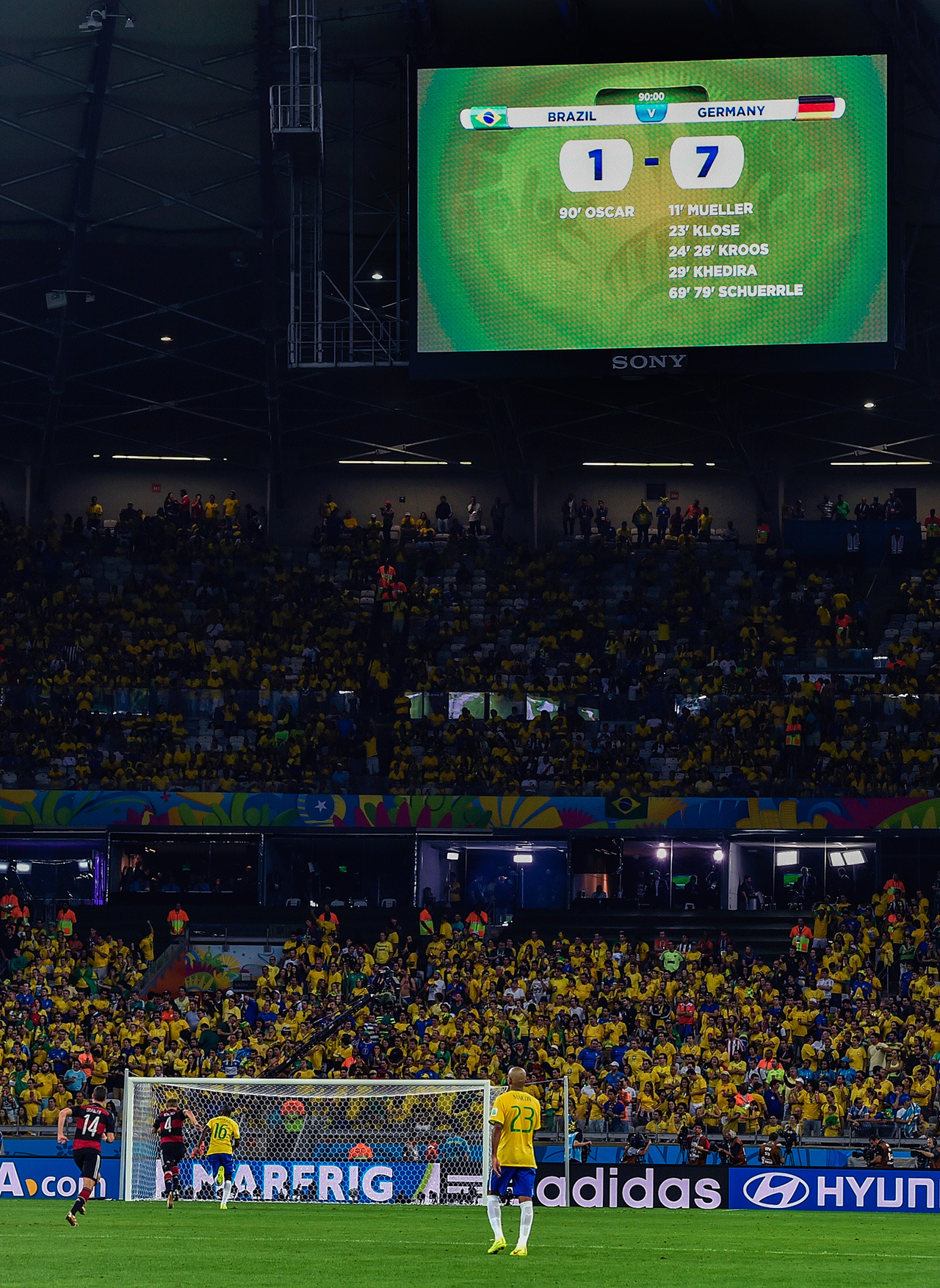
Miroslav Klose’s record of 16, set across four tournaments and capped by the 2014 triumph, stood as the outright benchmark through 2022. He broke Ronaldo’s previous mark of 15 during Germany’s infamous 7-1 semi-final win over Brazil in 2014. Ronaldo was also part of Brazil’s 1994 winning squad but did not play, with all 15 of his World Cup goals coming across the 1998, 2002, and 2006 tournaments. Gerd Müller’s efficiency is astonishing, 14 goals in just 13 appearances, while Just Fontaine’s 13 in a single 1958 tournament remains an unbreakable feat.
Note: These figures run through Qatar 2022. During the ongoing 2026 tournament, Lionel Messi and Kylian Mbappé have both surpassed Klose’s 16-goal haul, rewriting the top of this leaderboard in real time.
Most Carded Nations: Yellow and Red Cards
For all the romance of the World Cup, it has a dark art too. Discipline, fouls, and flashpoints are woven through the tournament’s fabric, from the Battle of Santiago in 1962 to Zidane’s headbutt in 2006. Below is a commonly cited ranking of the most booked and sent-off nations in World Cup finals history, through the 2022 tournament.
Top 10 by Yellow Cards
| Rank | Nation | Yellow Cards |
|---|---|---|
| 1 | Argentina | 134 |
| 2 | Germany | 118 |
| 3 | Brazil | 111 |
| 4 | Netherlands | 103 |
| 5 | Italy | 90 |
| 6 | Mexico | 85 |
| 7 | France | 77 |
| 8 | South Korea | 76 |
| 9 | Uruguay | 74 |
| 10 | Spain | 66 |
Top 10 by Red Cards
| Rank | Nation | Red Cards |
|---|---|---|
| 1 | Brazil | 11 |
| 2 | Argentina | 9 |
| 2 | Cameroon | 9 |
| 4 | Netherlands | 8 |
| 4 | Italy | 8 |
| 4 | Uruguay | 8 |
| 7 | Germany | 7 |
| 7 | Mexico | 7 |
| 9 | France | 6 |
| 9 | Portugal | 6 |
The pattern is striking. Argentina and Brazil, the two great South American rivals, sit atop the disciplinary tables almost as comfortably as they do the scoring charts, a reminder that flair and ferocity have always travelled together at this tournament. Brazil lead the red-card count with 11, while Argentina top the yellows with 134. The Netherlands’ lofty yellow-card perch is a legacy of their physical, high-intensity sides of the 1970s and 2010s, including the infamous 2010 final and the bad-tempered 2022 quarter-final against Argentina, in which Spanish referee Antonio Mateu Lahoz brandished a scarcely believable 18 cards.
Cameroon’s presence in the red-card top three is remarkable given they have played far fewer World Cup matches than the giants around them, a reflection of their combative, full-blooded style. Germany’s relatively modest red-card count, seven across more than 100 World Cup matches, sits oddly with their reputation for efficiency, though their yellow-card tally tells a story of relentless, physical pressing down the decades.
Note: Yellow and red cards were introduced at Mexico 1970, so card tables do not cover the earliest tournaments in the same way goals and match records do. Card totals can vary slightly by provider depending on whether second yellows, staff cards, and post-match sanctions are counted.
Fascinating World Cup Facts
A tournament this old, this grand, and this dramatic collects stories the way a goalkeeper collects crosses. Here are some of our favourites.
- The youngest winner. Pelé was just 17 years and 249 days old when he won the 1958 World Cup with Brazil, scoring a hat-trick in the semi-final and a brace in the final. He remains the only player to win three World Cups (1958, 1962, 1970).
- The Maracanazo. The 1950 final-group decider between Brazil and Uruguay drew an estimated 200,000 fans to the Maracanã, the largest crowd ever for a football match. Uruguay’s 2-1 win is still mourned in Brazil.
- Just Fontaine’s unbreakable record. France’s Just Fontaine scored 13 goals at the 1958 World Cup, a single-tournament record that has stood for nearly 70 years, despite the expansion to more matches.
- The all-time top scorer. Germany’s Miroslav Klose holds the career World Cup goals record with 16, spread across four tournaments (2002–2014), edging past Ronaldo’s 15.
- The biggest win. Hungary’s 10-1 demolition of El Salvador in 1982 remains the largest margin of victory in World Cup history.
- The fastest goal. Turkey’s Hakan Şükür scored after just 11 seconds against South Korea in the 2002 third-place play-off.
- The highest-scoring match. Austria beat Switzerland 7-5 in the 1954 quarter-final, a staggering 12 goals in a single game.
- The Hand of God. Diego Maradona’s infamous “Hand of God” goal against England in 1986, followed four minutes later by his “Goal of the Century” solo run, is the tournament’s most controversial and most celebrated double act.
- The final hat-tricks. Only two players have scored a hat-trick in a World Cup final: England’s Geoff Hurst in 1966, and Kylian Mbappé for France in the 2022 showpiece. Hurst remains the only one to do it for the winning side.
- The trophies. The original Jules Rimet Trophy was used from 1930 and retired when Brazil won it outright for keeps after their 1970 triumph, only to be stolen in 1983 and never recovered. The modern FIFA World Cup Trophy has been awarded since 1974.
- Back-to-back champions. Only Italy (1934, 1938) and Brazil (1958, 1962) have successfully defended their title, a feat Argentina will attempt in 2026.
- Home advantage. Host nations have won the World Cup six times: Uruguay (1930), Italy (1934), England (1966), West Germany (1974), Argentina (1978), and France (1998), though none since 1998.
- The rarity of victory. In 22 tournaments, only eight nations have ever won, and just 13 have even reached a final. No team outside Europe or South America has ever lifted the trophy.
Looking Ahead: The Road Through 2026
As the World Cup pitches up across North America for the first time since 1994, it carries with it the weight of every story above, the Maracanazo, Pelé’s teenage genius, Maradona’s hand, Messi’s coronation. The 2026 edition will be the largest, longest, and most inclusive tournament yet, a 48-team celebration that asks whether a new nation can finally break the European-South American monopoly.
Will Argentina become the first back-to-back champions since Brazil in 1962? Can Mbappé-era France add a third star? Or will Brazil, absent from the winner’s circle since 2002, finally reclaim their place at the summit? Whatever happens, the World Cup’s greatest magic is that, for 90 minutes, the past and the future collide on a single pitch, and a new chapter is added to a story that began, improbably and beautifully, in Montevideo in 1930.
You’ve got the history, you’ve got the stats, now back up your football knowledge where it counts. Head over to PlayPredictWin, put your World Cup predictions to the test, and turn all that nostalgia into real prizes. Your predictions, your glory.
Sign up, predict the scores, climb the leaderboards and win prizes at playpredictwin.com


